How to Crochet for Beginners: First Stitches and Project
Learn how to crochet for beginners with our guide to tools, basic stitches, and a simple dishcloth pattern. Includes a stitch chart and troubleshooting tips.

A clear, slow-paced tutorial covering the slip knot, chain, and single crochet for beginners.
To crochet as a beginner, you must master the relationship between your hook and the yarn tension while learning three primary movements: the slip knot, the chain stitch, and the single crochet. This guide provides a mathematically verified pattern for a cotton dishcloth, which serves as an ideal first project because it is small, functional, and uses the most fundamental stitches in the craft.
Terminology Note: This guide uses US terminology. The first time a stitch is mentioned, its UK equivalent will appear in brackets, such as single crochet (UK double crochet). Always verify the terminology system of a pattern before starting, as using the wrong system will result in an item with incorrect proportions.
Choosing Your First Tools
The most critical decision for a beginner is selecting yarn that allows for clear stitch visibility. According to the Craft Yarn Council yarn weight system, weight 4 (Medium/Worsted) is the standard recommendation for learners.
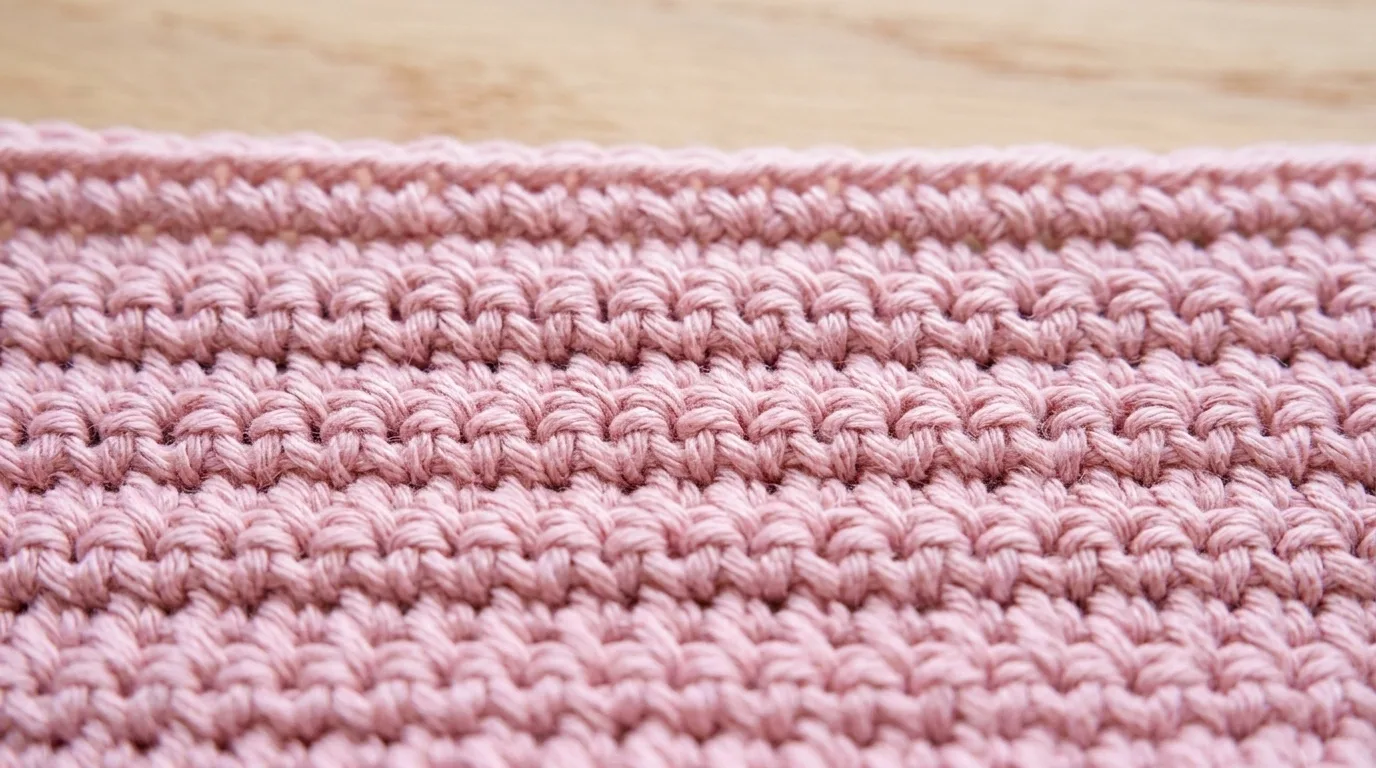
- Yarn Fibre: 100% cotton is preferred for dishcloths because it is durable and absorbent. Smooth cotton has excellent stitch definition, meaning you can easily see the “V” shape of each stitch.
- Yarn Colour: Use a light, solid colour like cream, yellow, or soft pink. Darker shades like navy or black make it nearly impossible to see where the hook should enter the fabric.
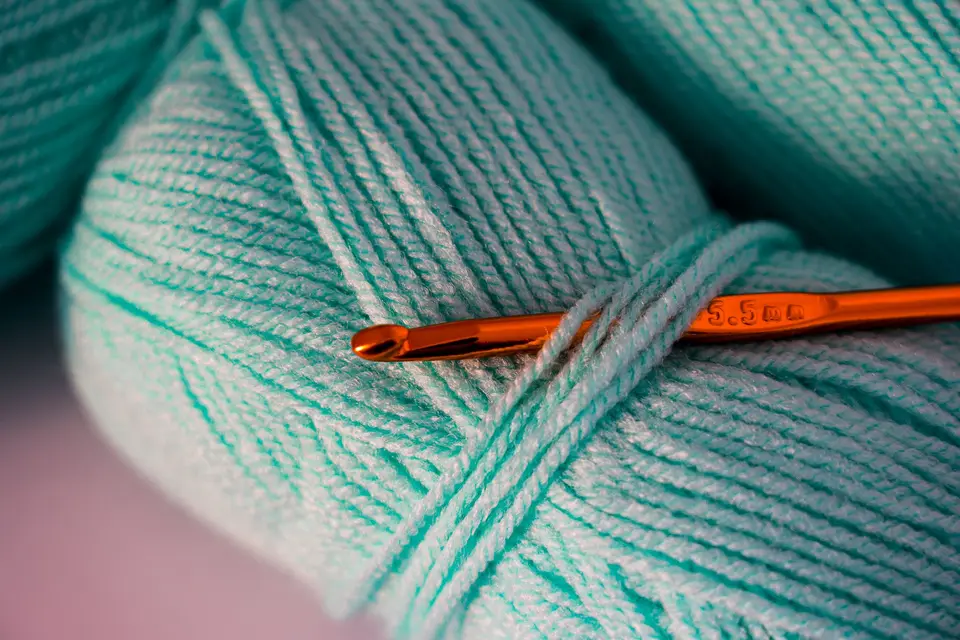
- Hook Size: Most worsted weight cotton labels, such as Lily Sugar’n Cream, recommend a 5 mm (US H-8) hook. While the Craft Yarn Council hook standards suggest 5.5 mm to 6.5 mm for general worsted yarn, the 5 mm hook creates a tighter, more functional fabric for cotton items.
For more details on how these measurements interact, see our guide on crochet hook sizes and yarn weights.
Holding the Hook and Yarn
There is no single “correct” way to hold your tools; the best grip is the one that prevents hand strain.
- Pencil Grip: Hold the hook like a pen, with the handle resting in the crook of your thumb and index finger.
- Knife Grip: Hold the hook like a dinner knife, with your palm over the handle.
Your non-dominant hand controls the tension. Drape the yarn over your index finger and weave it through your other fingers to create slight resistance. If the yarn is too loose, your stitches will be floppy; if it is too tight, you will struggle to pull the hook through the loops.
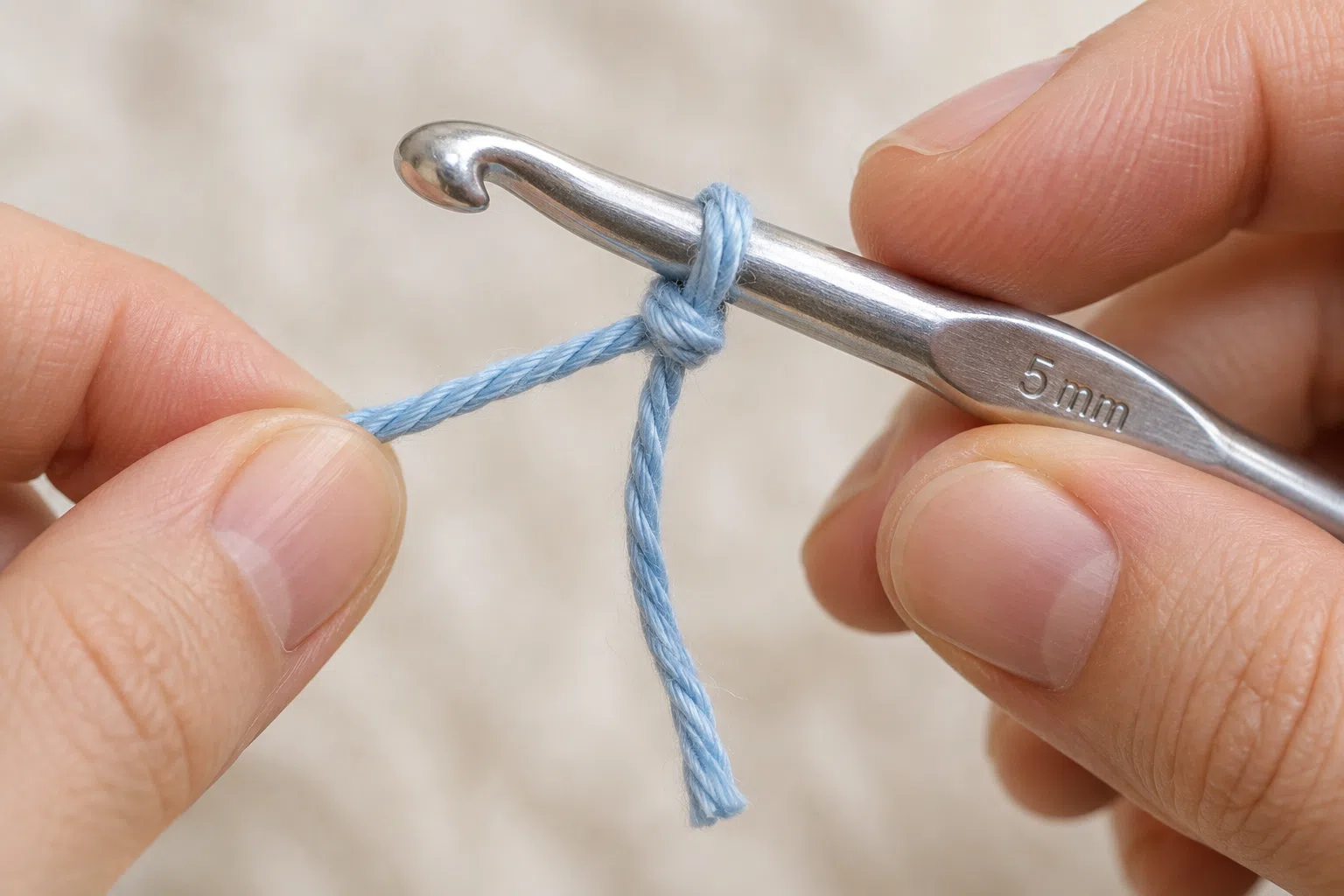 The slip knot is the starting point for almost every crochet project.
The Fundamental Stitches
1. The Slip Knot
Make a loop with your yarn, leaving a 6-inch tail. Pull a loop of the working yarn (the end attached to the ball) through the first loop. Insert your hook into this new loop and pull the ends to snug it up.
2. The Chain Stitch (ch)
Yarn over (yo) by wrapping the yarn from back to front over the hook. Pull the hook through the loop already on the hook. You have now made one chain. Repeat this to create a foundation chain. When counting chains, do not count the loop on the hook or the slip knot.
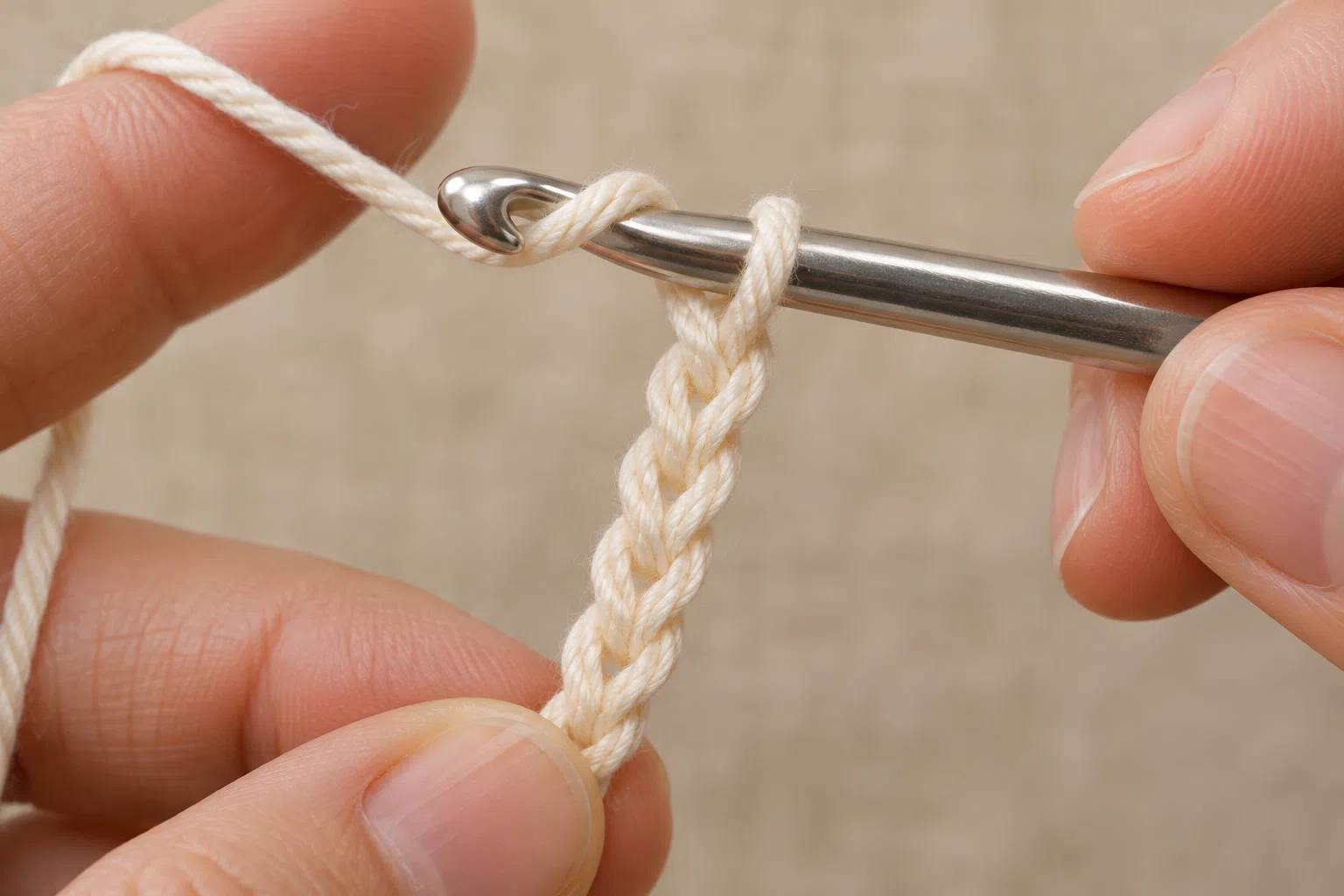 A yarn over is the most frequent movement in crochet.
3. Single Crochet (sc)
To work a single crochet (UK double crochet):
- Insert the hook into the designated stitch or chain.
- Yarn over and pull up a loop (2 loops on hook).
- Yarn over and pull through both loops on the hook.
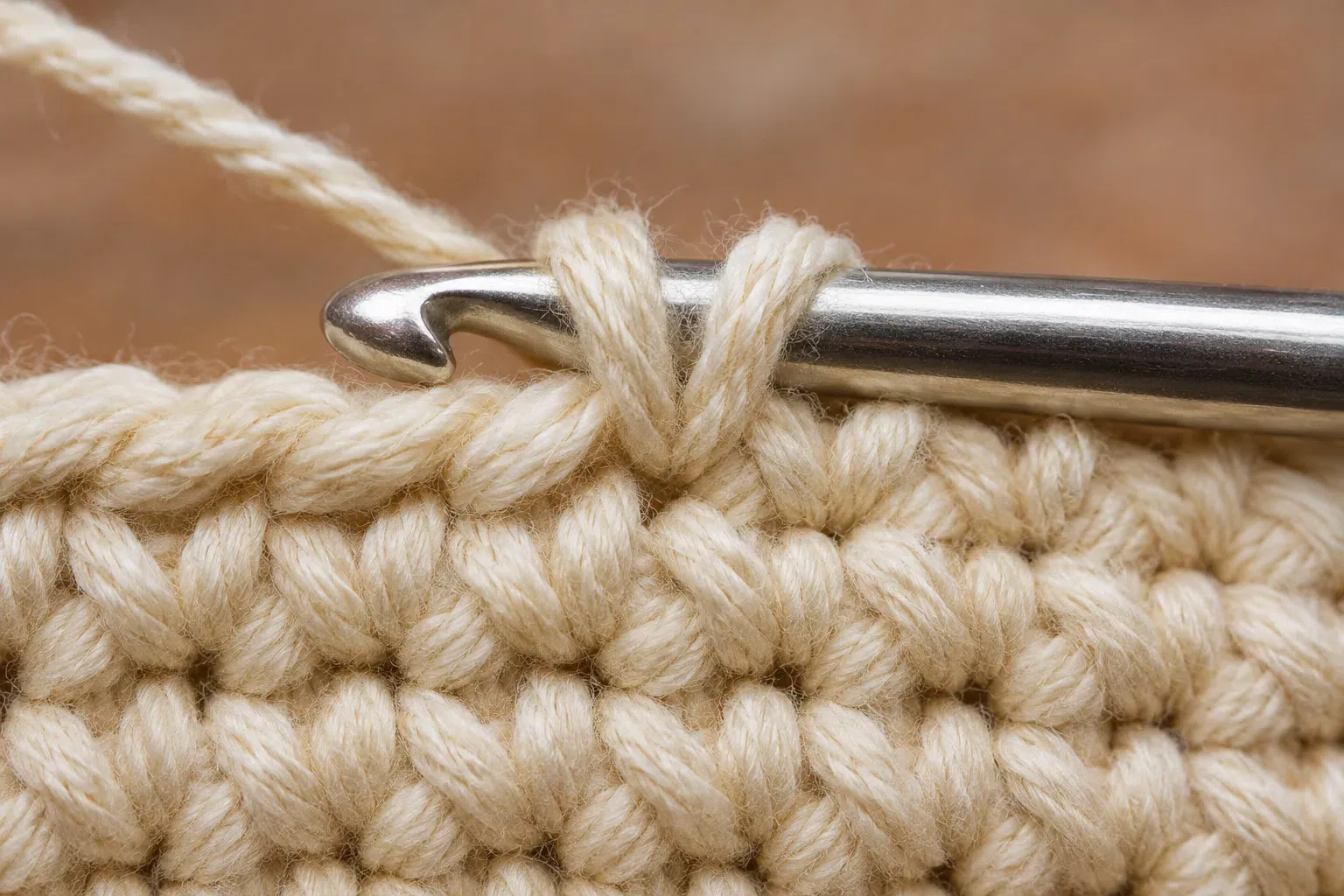 Always insert the hook under both top loops unless the pattern specifies otherwise.
Abbreviation Key
| Abbreviation | US Term | UK Equivalent |
|---|---|---|
| ch | chain | chain |
| sc | single crochet | double crochet (dc) |
| st(s) | stitch(es) | stitch(es) |
| yo | yarn over | yarn round hook (yrh) |
| rep | repeat | repeat |
Project: The Beginner Dishcloth
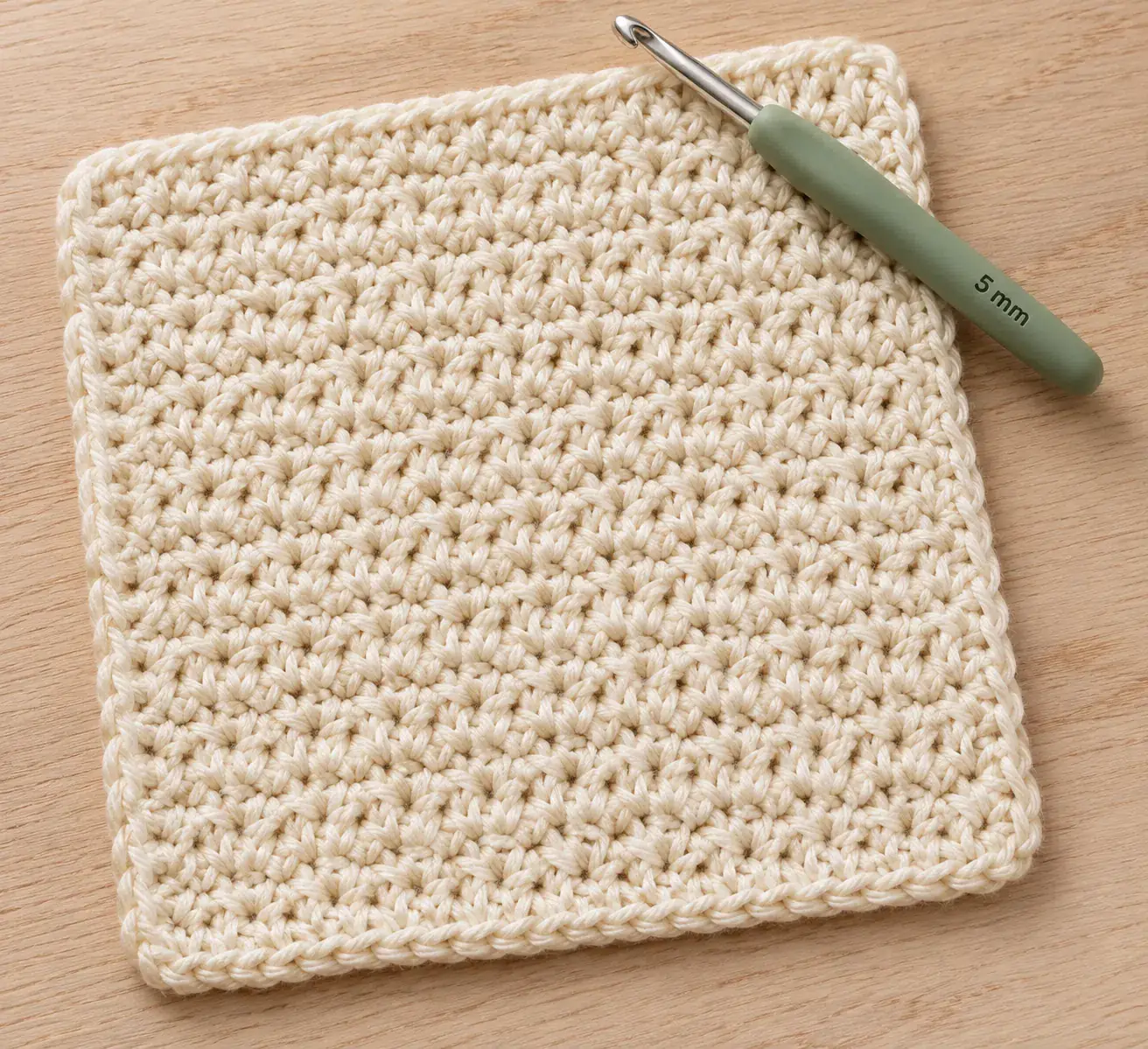
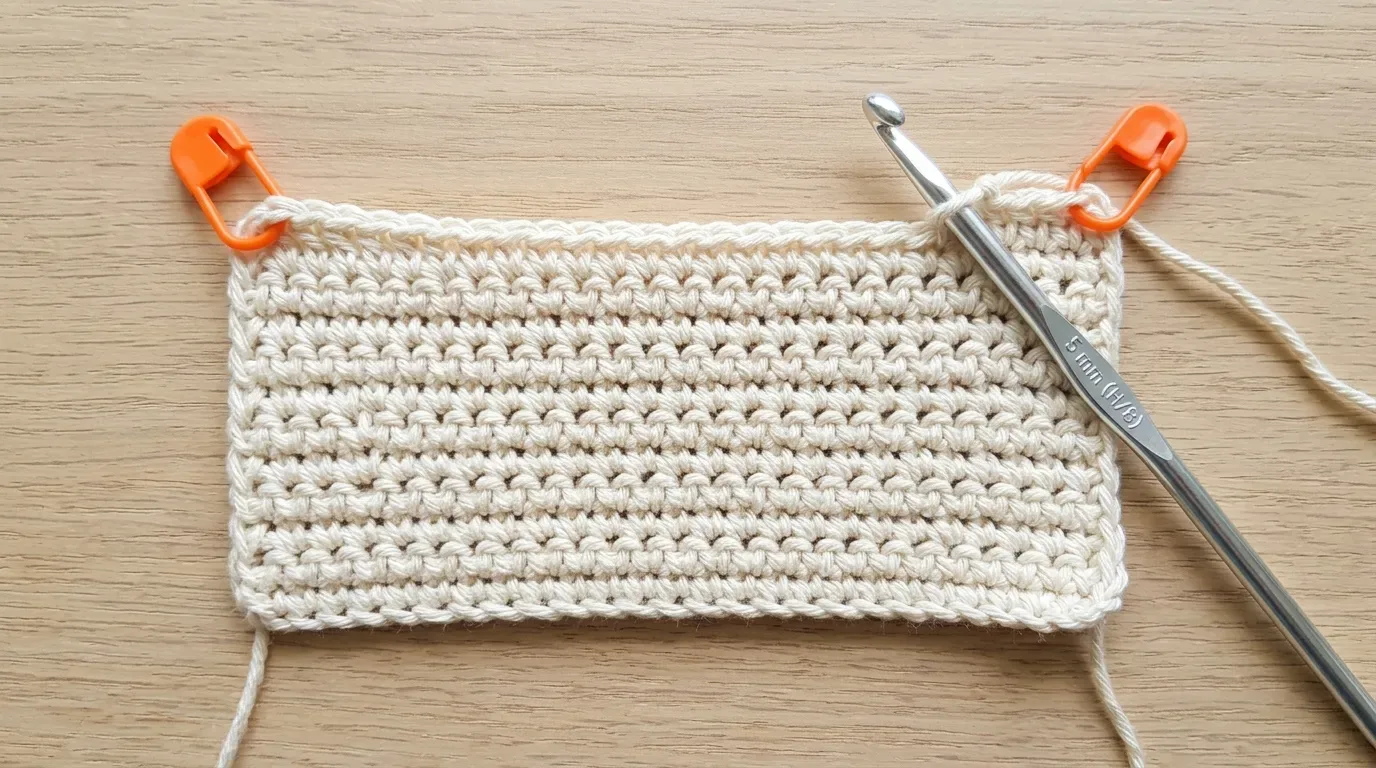
This pattern creates a square dishcloth using only single crochet. It is designed to help you practice maintaining a consistent stitch count.
- Skill Level: Basic
- Yarn: ~70 yards of 4 / Worsted weight cotton
- Hook: 5 mm (US H-8)
- Finished Size: ~7.7 inches square
- Gauge: 13 sc and 14 rows = 4 inches
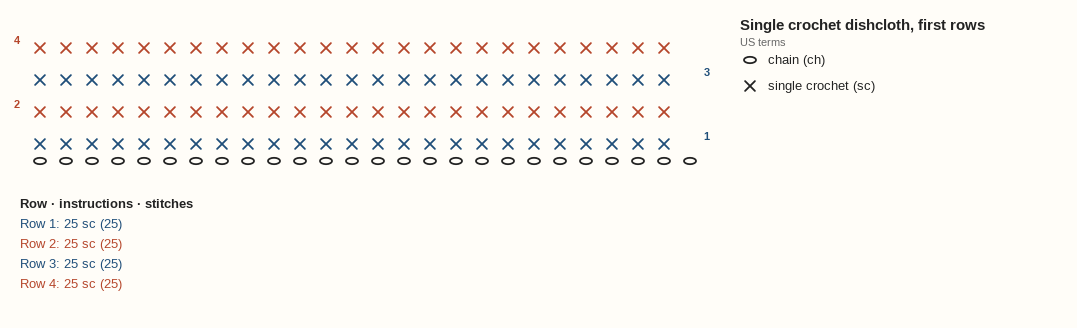
Foundation Chain: Ch 26.
Row 1: sc in 2nd ch from hook and in each ch across. [25 sts]
Row 2: ch 1, turn. sc in each st across. [25 sts]
Rows 3–27: Repeat Row 2 until the piece is square or you reach 27 rows. [25 sts]
Finish: Fasten off leaving a 6-inch tail. Weave in all ends using a tapestry needle.
Troubleshooting Common Mistakes
| Problem | Likely Cause | Solution |
|---|---|---|
| Edges are diagonal | Skipping the last stitch | Use stitch markers in the first and last stitch of every row. |
| Piece is getting wider | Adding a stitch in the turning chain | Do not work into the ch-1 turning chain; it does not count as a stitch. |
| Stitches are too tight | High tension | Relax your grip; try a hook one size larger for the foundation. |
| Holes in the fabric | Skipping a stitch in the middle | Count your stitches at the end of every single row. |
Why Counting Matters
In this pattern, you must have exactly 25 stitches in every row. If you have 24, you likely skipped the very last stitch, which often looks like a small bump on the side. If you have 26, you may have worked into the turning chain by mistake. Consistent counting is the difference between a square cloth and a triangle.
Next Steps
Once you are comfortable with the single crochet, you can explore other easy crochet projects for beginners like scarves or simple coasters. If you want to expand your skills, try learning the slip stitch crochet technique or look for crochet home decor ideas to use your new hobby around the house. When you are ready to wash your finished cotton items, refer to the Craft Yarn Council care symbols for proper laundering instructions.
How to Crochet a Single Crochet Dishcloth
A beginner-friendly pattern to practice the slip knot, foundation chain, and single crochet stitch while making a functional home item.
You'll need
- 70 yards of worsted weight cotton yarn
- Tapestry needle
Tools
- 5 mm crochet hook
- Stitch markers
- Scissors
-
Create a Slip Knot
Form a loop with the yarn, pull the working end through, and slide it onto the hook. Tighten it so it is snug but moves freely.
-
Work the Foundation Chain
Yarn over the hook and pull through the loop 26 times to create your foundation chain. Do not count the loop on the hook.
-
Single Crochet Row 1
Insert the hook into the second chain from the hook. Yarn over, pull up a loop, yarn over, and pull through both loops. Repeat across for 25 stitches.
-
Repeat Rows and Finish
Chain 1, turn, and work 25 single crochet stitches in each row. Repeat until you have 27 rows, then fasten off and weave in the ends.
Essential Beginner Crochet Kit
You only need a few specific items to start. Choosing the right yarn weight and hook size makes the learning process significantly smoother.
-
5 mm (US H-8) Crochet HookEssential
Standard size for worsted weight yarn. Choose an ergonomic handle to reduce hand fatigue.
-
4 / Worsted Weight Cotton Yarn
Choose a light, solid colour. Cotton has no fuzz, making it easier to see your stitches.
-
Locking Stitch Markers
These help you identify the first and last stitch of a row, preventing uneven edges.
-
Blunt Tapestry Needle
Used for weaving in yarn tails so your work does not unravel.
Frequently asked questions
Is crochet easier to learn than knitting?
Many beginners find crochet easier because only one stitch is 'live' on the hook at a time. If you make a mistake, you only have one loop to catch, whereas knitting involves a whole row of active stitches.
Why is my crochet piece getting narrower at the edges?
You are likely skipping the last stitch of the row. This is the most common beginner mistake. Use a stitch marker in the first and last stitch of every row to ensure you work into them correctly.
What is the best yarn for a first-time crocheter?
A smooth, light-coloured cotton or acrylic yarn in weight 4 (worsted) is best. Avoid dark colours, 'fuzzy' yarns, or 'blanket' yarns, as they hide the stitch definition and make it difficult to see where to insert your hook.
How do I know if I am using US or UK terms?
Check the pattern introduction. This guide uses US terms. If a pattern mentions 'treble crochet' for a basic beginner project or 'miss' instead of 'skip', it might be using UK terms. US single crochet is the same as UK double crochet.
Why is my foundation chain so tight and curling?
Beginners often pull the yarn too tight on the initial chain. Try using a hook one size larger (5.5 mm) just for the foundation chain, then switch back to the 5 mm hook for the first row of stitches.
Sources
- Craft Yarn Council: Yarn Weight System— craftyarncouncil.com
- Craft Yarn Council: Hooks and Needles— craftyarncouncil.com
- Craft Yarn Council: Care Symbols— craftyarncouncil.com
First published
Photo credits
Thank you to AI illustration for sharing this photograph.