Snake Plant Care: Diagnose Drooping, Wrinkles and Rot
Snake plant care with worked diagnoses for wrinkled or collapsing leaves, recovery checkpoints, seasonal watering checks and measurable light guidance.
Snake plant care starts with letting the potting mix dry throughout before watering, using a pot with drainage holes, and keeping the plant away from cold drafts. Give it daylight or a grow light even if the label says “low light.” If leaves are soft or falling over while the soil is damp, check the roots before adding water: New York Botanical Garden identifies overwatering as the most frequent cause of failure.
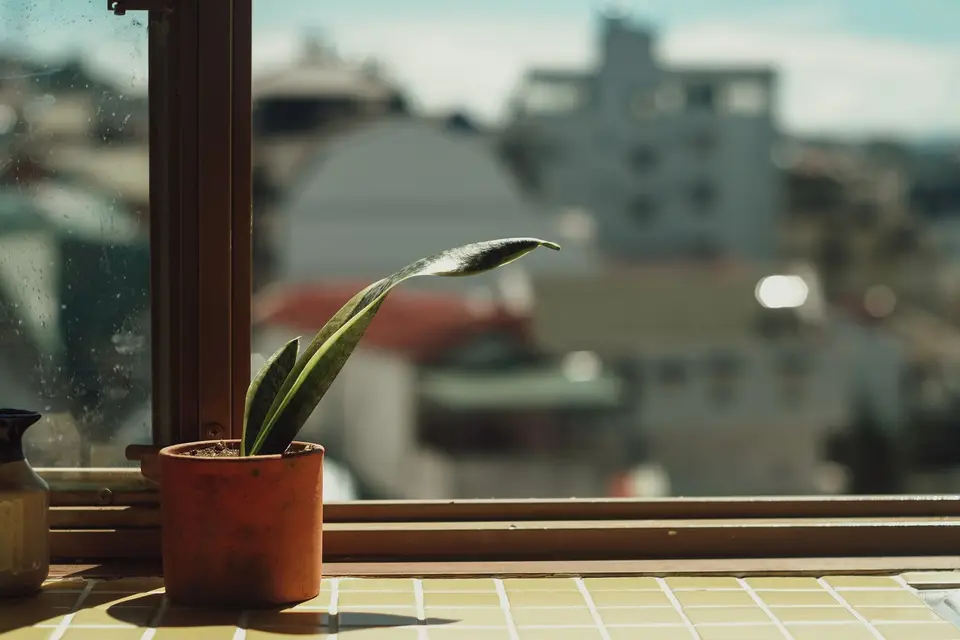
The cover shows a potted snake plant catching light beside a window.
This guide covers the familiar flat-leaved snake plant, Dracaena trifasciata, formerly Sansevieria trifasciata. Its identity and cultivars are listed by NC State Extension. Other plants share the common name, so check the nursery label before borrowing a care routine.
Key Takeaways
- Test the soil before watering, including below the dry surface.
- Use the seasonal table as a reminder to check, not an instruction to pour.
- Wrinkles with dry soil and firm roots support watering; wrinkles with decaying roots call for a rescue assessment.
- Track new damage and firm tissue during recovery; old marks alone cannot tell you whether the fix worked.
Watering: check the pot before the calendar
Water once the mix has dried throughout. A dry surface alone is insufficient: Maine Extension advises complete drying for succulents. The RHS watering guidance says to water the mix, avoid the central leaf cluster and empty runoff.
For a deeper pot, use a wooden skewer as an extra check, as described by NC Cooperative Extension. Slide it gently down near the pot edge, avoiding resistance from roots. Damp soil clinging to it means wait. This looks below the surface; it isn’t a precise moisture reading. If the result is unclear and the plant is collapsing, inspect the root ball instead of guessing.
Once watering is due, wet the whole root ball and let excess water escape, following Maine Extension’s watering guidance. Set the decorative cover pot beside the sink so you can see where the runoff goes.
A simple schedule by season
The table below is an editorial check-in routine, not a tested watering interval. NC State advises letting soil dry between spring-to-autumn waterings. Its winter guidance is every one to two months. A warm, well-lit room can behave differently from a cool, dim one.
| Season or setting | Reminder to check | What authorizes watering |
|---|---|---|
| Spring and summer, with active growth | Check weekly; skip watering if damp | Mix dry throughout, with no soft or rotting base |
| Autumn, as daylight drops | Keep the check; expect more skipped waterings | The same dryness test, regardless of the last watering date |
| Winter in a cool, dim room | Check every other week; watering may be much less frequent | Dry mix; use the one-to-two-month winter guidance only as context |
| Low light in any season | Record how long the deeper mix stays damp | Dryness confirmed below the surface, not just a dusty top |
Write down “checked, still damp” as readily as “watered.” That makes the reminder useful without turning it into an automatic drink. If someone looks after your plants, leave the soil test beside the pot rather than a fixed amount of water.
Keep separate instructions for other houseplants. The pothos care guide has its own watering cues; sharing a shelf doesn’t mean sharing a watering day.
How much light does it actually need?
Choose a spot near an east-facing window or near a west-facing window outside the harsh direct beam. Measure at leaf level if placement is uncertain. University of Minnesota Extension defines low light as 50–250 foot-candles and medium light as 250–1,000 foot-candles, and includes snake plants among low-light options. These are broad indoor-light categories, not a species-specific optimum.
Use the medium-light band as a brighter starting point for growth, with protection from intense summer sun. A light reading behind the curtain or shelf matters more than a reading taken against the glass.
Low-light tolerance has a limit. A windowless room without suitable artificial lighting will not sustain the plant indefinitely. Minnesota Extension explains that plants eventually exhaust their energy reserves without adequate light. Compare placements in the low-light indoor plants guide before choosing a dark corner.
Moving a plant straight from shade into strong sun can scorch it, according to NYBG. Increase exposure gradually. Don’t interpret every pale patch as a request for fertilizer.
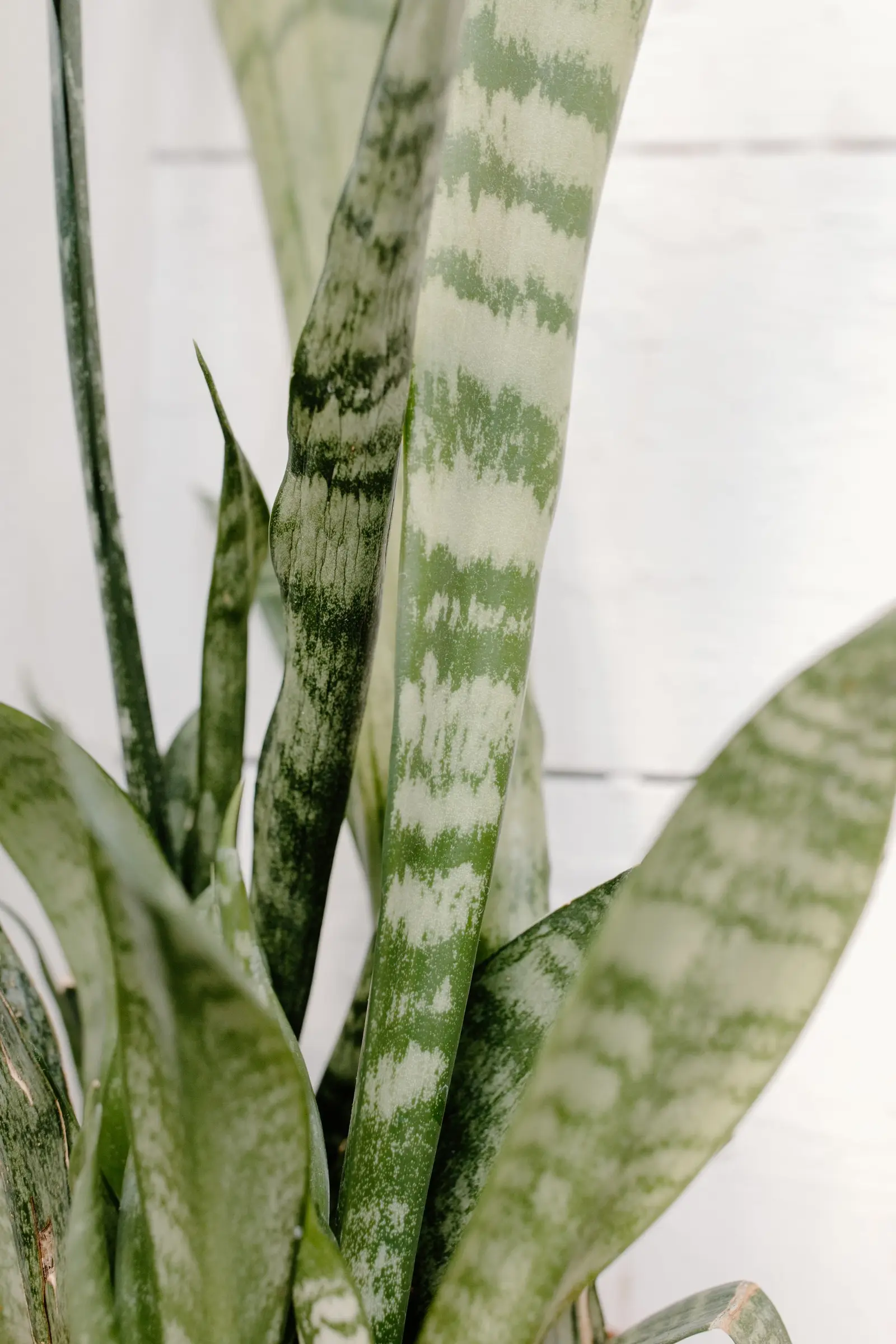
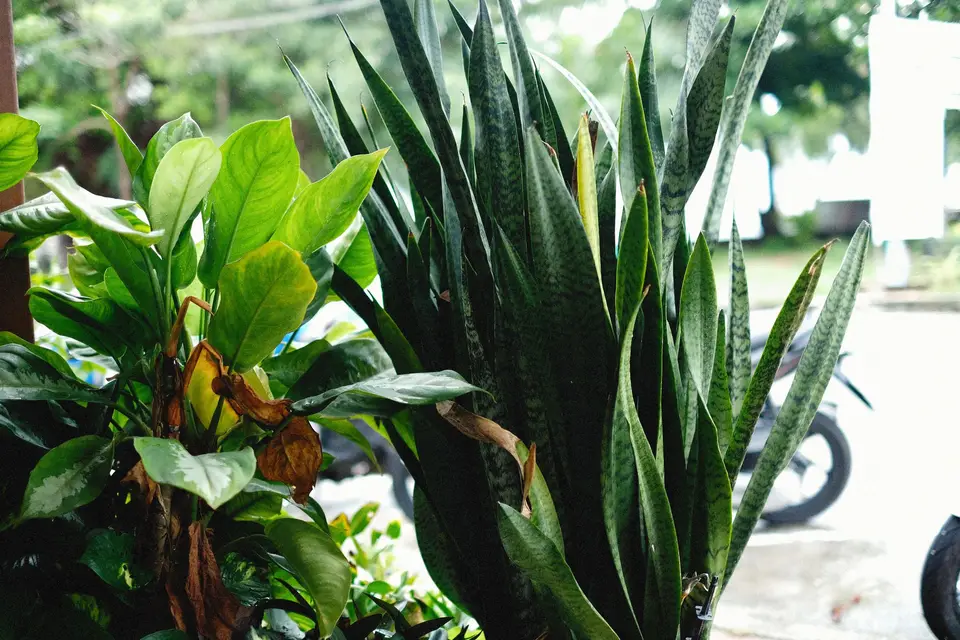
Green bands run across the upright, flat leaves.
Wrinkled or collapsing? Work through the evidence
Check overwatering and roots before pests, unless insects are visible. Maine Extension explains the confusing part: excess water and poor drainage can damage roots, preventing water uptake. A thirsty-looking leaf can therefore sit above wet soil.
Before changing care, record the deeper soil moisture, whether the base feels firm, and any recent move or cold exposure. If the plant is collapsing, gently slide out the root ball. SDSU Extension distinguishes sturdy, pliable roots from brown, mushy, fragile roots. An odor can accompany decay; its absence does not settle the diagnosis.
Worked example: wrinkles after someone watered too often
Suppose a plant was watered repeatedly during a holiday. Its leaves now look wrinkled. The following are hypothetical decision paths, not reports of a growing trial.
The mix is still damp and roots are soft. Another drink is the wrong response. Follow the root-rot assessment below. Wet-soil wilting with soft brown roots is a warning combination described by Wisconsin Extension.
The mix has since dried, but roots are still decaying. Dry soil now does not prove the plant was underwatered. Inspect the roots rather than erasing the watering history. This is a diagnostic inference from Maine’s explanation of impaired uptake: drying the mix cannot establish that damaged roots have recovered.
The mix is dry throughout, roots are firm and the leaf base is firm. Water shortage becomes a reasonable working explanation. Water the whole root ball, then drain. Photograph the wrinkles before watering. At the next check, compare leaf firmness and look for new collapse; don’t keep adding water while the mix remains damp just because wrinkles persist. If decline continues, reopen the diagnosis.
The decision changes with the roots, even though the visible complaint stays “wrinkled leaves.”
A soft leaf after a cold night: don’t stop at “rot”
Imagine a plant beside a window left open overnight. A leaf develops a translucent, soaked-looking patch, but the pot isn’t unusually wet and the inspected roots remain firm. Cold injury deserves attention before watering or root surgery. NC State’s container-plant handbook describes water-soaked tissue after severe chilling and notes that symptoms can be delayed.
Move it to a warm spot away from drafts, retaining the measured light guidance above. Put a minimum/maximum thermometer beside the pot to check the overnight conditions; NC State recommends this for detecting indoor temperature differences. Photograph the patch and the base.
If instead you find damp mix and soft brown roots, address suspected decay as well as the cold location. Cold exposure and root trouble are not mutually exclusive. A cold night is a clue, not permission to ignore the root inspection. Conversely, firm roots are not a reason to cut them away because a leaf looks damaged.
One floppy leaf or the whole clump leaning?
An occasional long leaf flopping in low light can need support. The RHS distinguishes this from the whole plant leaning, which calls for a rot check. For firm roots and a stable base, reassess the light at leaf height and support the floppy leaf. For a newly unstable clump, inspect below the soil before tying everything upright.
| Symptom | First check | Decision |
|---|---|---|
| Wrinkles, damp mix | Root firmness and leaf base | Inspect before watering; assess decay if roots are soft |
| Wrinkles, dry mix after earlier overwatering | Roots, not today’s surface alone | Firm roots support watering; decayed roots redirect you to rescue assessment |
| Sudden soft patches after cold exposure | Exposure history, deeper moisture and roots | Correct the cold spot; address decay too if present |
| Floppy leaf, otherwise stable clump | Root condition, then measured light | Support and improve placement if roots and base are firm |
| Pale patches after a sudden move into sun | Which side faced the sun and when damage began | Reduce harsh exposure and acclimate gradually (NYBG) |
| Decline with cottony masses or fine webbing | Inspect leaf bases and surfaces | Separate for pest identification; SDSU describes these signs |
Root rot: decide what is worth saving
A repot is a rescue attempt only if enough healthy roots remain. SDSU Extension advises rinsing remaining healthy roots and repotting into fresh mix in a clean draining container, with reduced watering afterward. Some plants cannot be saved.
For a clump with a distinct healthy rooted section, the RHS division method offers a way to keep that section: separate it and discard damaged or dead portions. Use a snug pot and free-draining mix. Don’t pot a soft, deteriorating base and expect new soil to cure it.
If no sound rooted section remains, or decay continues through the base, discarding the plant is a reasonable endpoint. Wisconsin Extension says disposal is often the best option for root rot. It also advises against home fungicide treatment. Don’t reuse suspect mix or runoff; disinfect tools and the work surface afterward.
Recovery checkpoints and reasons to change course
Use the checks below as an editorial monitoring routine, not a biological recovery timetable. Take a baseline photo after the intervention and compare at a brief daily visual check. Leave the roots undisturbed unless decline gives you a reason to inspect again.
| Checkpoint | Evidence to record | When to change course |
|---|---|---|
| After moving or repotting | Firmness of the remaining base; outline of existing soft areas in a photo | No healthy rooted section remains: reconsider saving the clump |
| During follow-up checks | Whether another leaf collapses or a soft area expands | New deterioration: inspect roots/base and seek diagnostic help if the cause remains unclear |
| Before the next watering | Moisture deeper in the mix; whether the base is still firm | Damp mix or renewed softening: do not add water just to chase wrinkles |
| When active growth resumes | Condition of new leaves as they develop | New growth also deteriorates: reassess conditions and ask for help |
Stable tissue is encouraging, but isn’t proof of full recovery. Judge new damage separately from old scars: UC IPM cautions that existing blemishes are unlikely to disappear. There is no sourced deadline here for an old wrinkled leaf to look perfect.
For continued decline despite corrected drainage and temperature, send a university extension service or plant clinic photos of the whole plant, base and exposed roots, along with the watering and cold-exposure history. Wisconsin’s diagnostic clinic warns that few diseases can be identified accurately by eye. Use that route before guessing a pathogen or buying a treatment.
Cold drafts matter more than extra humidity
Keep the plant in a warm room. NYBG recommends 65–80°F and no temperatures below 55°F. Check beside the pot overnight, especially near an exterior door or drafty window. The temperature at a thermostat across the room may not describe that spot.
Ordinary household humidity is sufficient, according to the same guide. Skip misting. Before buying a humidifier for a struggling snake plant, check its soil and the cold air reaching its leaves.
Repot only when the container is full
Repot when roots and leaves fill the pot or make it buckle, advises the RHS. Use a slightly larger pot with drainage and free-draining cactus mix. Don’t put a small root ball in a deep tub of wet soil.
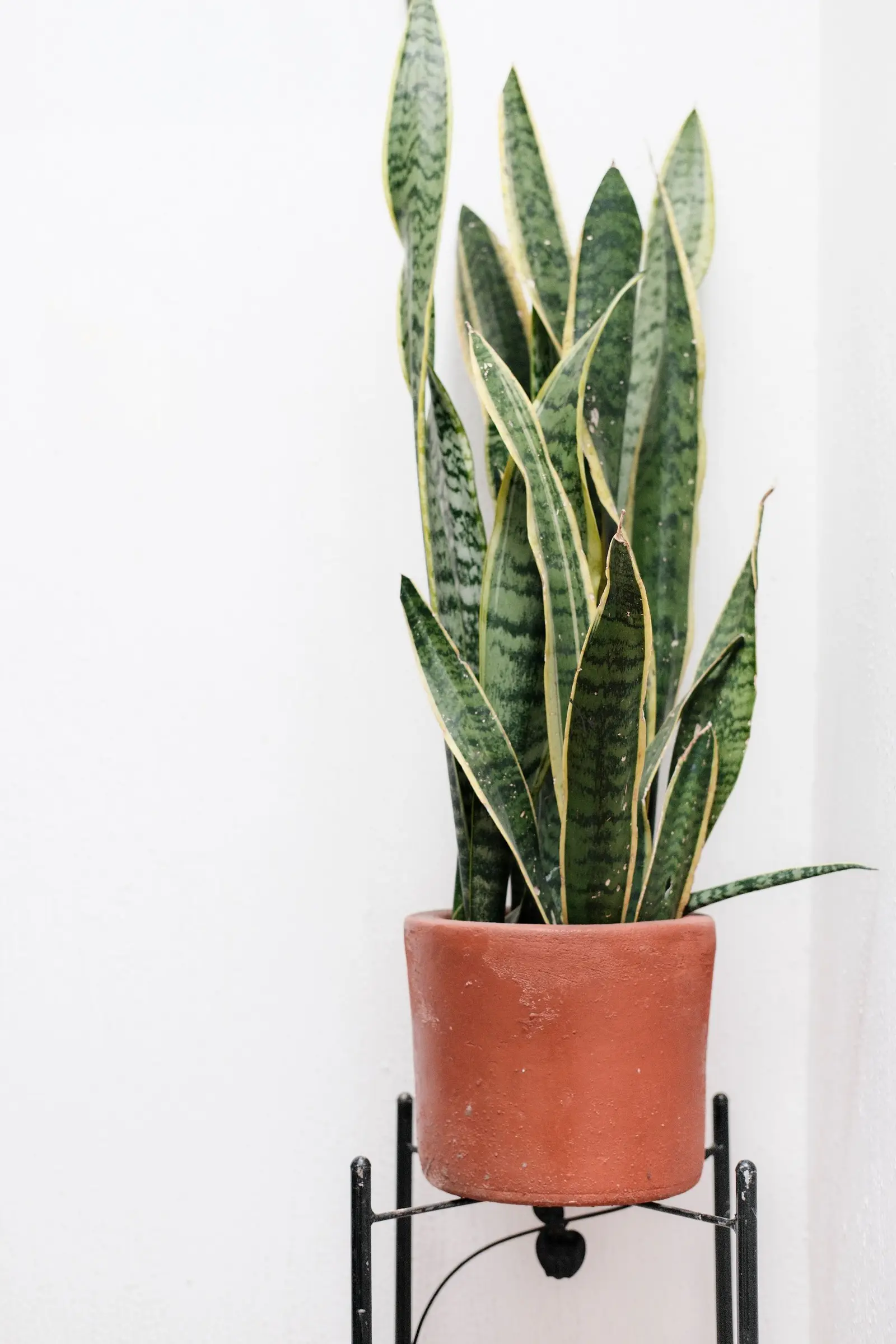
Upright snake plant leaves rise from a simple terracotta pot.
For routine repotting, work during active growth. Slide the plant out, inspect the roots and place it in fresh mix at its previous planting depth. Gently firm the mix and water it in, then return to the dryness test. These steps follow Illinois Extension’s repotting guidance; a rotting plant needs the assessment above before routine repotting advice applies.
Keep drainage holes clear. A gravel layer cannot replace them and may impede drainage, warns Wisconsin Extension.
For feeding, the RHS suggests monthly liquid houseplant or cactus fertilizer during the growing season. Follow the product’s dilution instructions. Diagnose a sick plant before feeding it.
Choose the variety for the space
Common cultivars of the flat-leaved species differ enough to check before buying. NC State’s cultivar list describes:
- Laurentii: green banded leaves with yellow edges.
- Hahnii: a short, funnel-shaped rosette for a smaller footprint.
- Moonshine: silvery-gray foliage with narrow dark-green margins.
The cylindrical African spear, Dracaena angolensis, is a separate species, as NC State’s African spear profile confirms. Don’t label its cylindrical leaves as a variety of the flat-leaved plant.
Match the mature shape to the available light before arranging the display. The guide to styling plants on shelves can help with spacing; keep the actual leaf position in the light you measured.
Snake plants and pets
Snake plant is toxic to cats and dogs, according to the ASPCA’s plant entry, which uses its former botanical name. It contains saponins; listed signs include nausea, vomiting and diarrhea. If ingestion is suspected, call your veterinarian or the ASPCA Animal Poison Control Center.
If you cannot keep the plant inaccessible, use the pet-safe houseplants article to compare alternatives and check each plant’s identity against its ASPCA entry before buying.
For another beginner plant, compare the easy indoor plants guide. For the snake plant already in your room, start with the pot: check below the surface, empty any trapped runoff, and note whether its base is firm before deciding what to change.
Care sources checked October 29, 2026. Worked examples are hypothetical applications of the cited guidance. Seasonal reminders and recovery checks are editorial routines, not results from a growing trial.
Frequently asked questions
How often should I water a snake plant?
Wait until the potting mix has dried throughout. Spring and summer usually need closer monitoring than winter, but the pot decides the interval. NC State gives every one to two months as winter guidance; check for dryness before watering.
Why are the leaves wrinkled when the soil is wet?
Do not assume it needs another drink. Damaged roots may be unable to absorb water. Inspect for brown, soft roots before adding water, and check recent cold exposure. Firm roots and a firm base call for a different response from spreading decay.
Can a snake plant live in a windowless bathroom?
Only with suitable artificial plant lighting. Low-light tolerance does not mean it can survive indefinitely without a light source. A steamy bathroom is also a poor match for a plant that prefers drier conditions.
Should I repot a new snake plant straight away?
Usually no. Keep a healthy plant in its draining pot until roots and leaves fill the container or make it buckle. Inspect sooner if the base turns soft.
How can I tell whether a struggling snake plant is recovering?
Compare dated photos for new collapse or expanding soft areas. Stable, firm tissue is an early checkpoint; healthy new growth during active growth is stronger evidence. Old damaged patches may remain. Further softening calls for another diagnosis, not an extra drink.
What should I do if my cat chews a snake plant leaf?
Call your veterinarian or the ASPCA Animal Poison Control Center. The pet-safety section above links directly to the ASPCA snake plant entry.
Sources
- New York Botanical Garden: Snake Plant (Dracaena)— libguides.nybg.org
- RHS: How to grow sansevierias— rhs.org.uk
- NC State Extension: Dracaena trifasciata— plants.ces.ncsu.edu
- University of Minnesota Extension: Lighting for indoor plants and starting seeds— extension.umn.edu
- South Dakota State University Extension: Troubleshooting Common Problems: Houseplant How-To— extension.sdstate.edu
- ASPCA: Mother-in-Law’s Tongue (Snake Plant)— aspca.org
Photo credits
Thank you to Dương Nhân, Tara Winstead and Brunxs for sharing these photographs.