How to Style Plants on Shelves (Without It Looking Cluttered)
How to style plants on shelves without clutter: check light, match plant shape to shelf height, use the triangle rule, limit pot colors, breathing room.
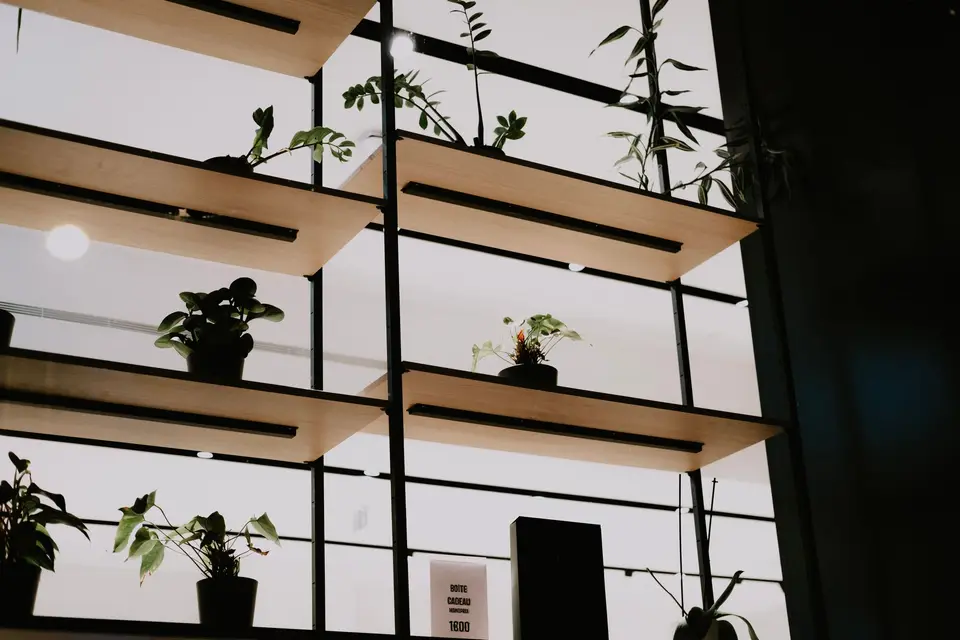
A shelf full of plants is one of the fastest ways to make a room feel alive. It is also easy to get wrong: too many small pots in a row, plants that fade because the shelf is dark, and water rings on the wood. The method below works on one floating shelf or a whole bookcase. Start with the light, then match plant shape to shelf height, build height with the triangle rule, limit pot colors, and leave empty space so each plant stands out.
Key takeaways
- Check the light before you buy. A shelf more than a few feet from a window usually suits low-light plants, or needs a grow light.
- Put trailing plants on top, compact plants at eye level, and bigger upright plants on the bottom or the floor beside.
- Group in triangles of different heights, and let the tall items zigzag across the bookcase.
- Stick to two or three pot colors. Empty space, about one third of each shelf, keeps the arrangement calm.
Check the light first
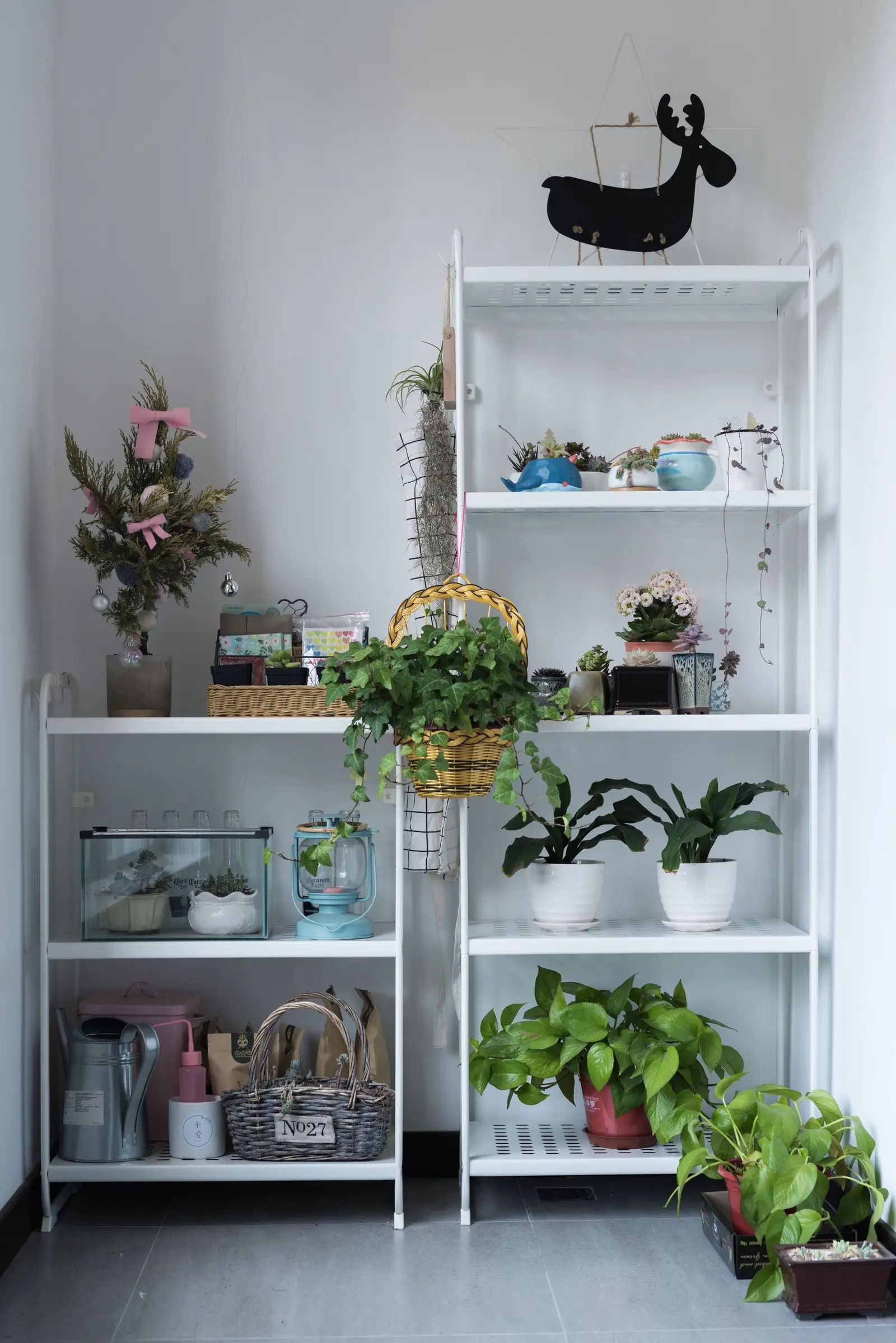
Before you buy a single plant, figure out how much light the shelf actually gets. Light decides what will thrive there, and it is the step most people skip. Penn State Extension notes that light is the most common factor limiting houseplant growth indoors, and that most foliage plants do best within a few feet of a window. Plants more than about 10 feet from an average window rarely get enough light, even low-light types. Light is measured in foot-candles, and most low-light houseplants need between 50 and 250 of them to maintain growth.
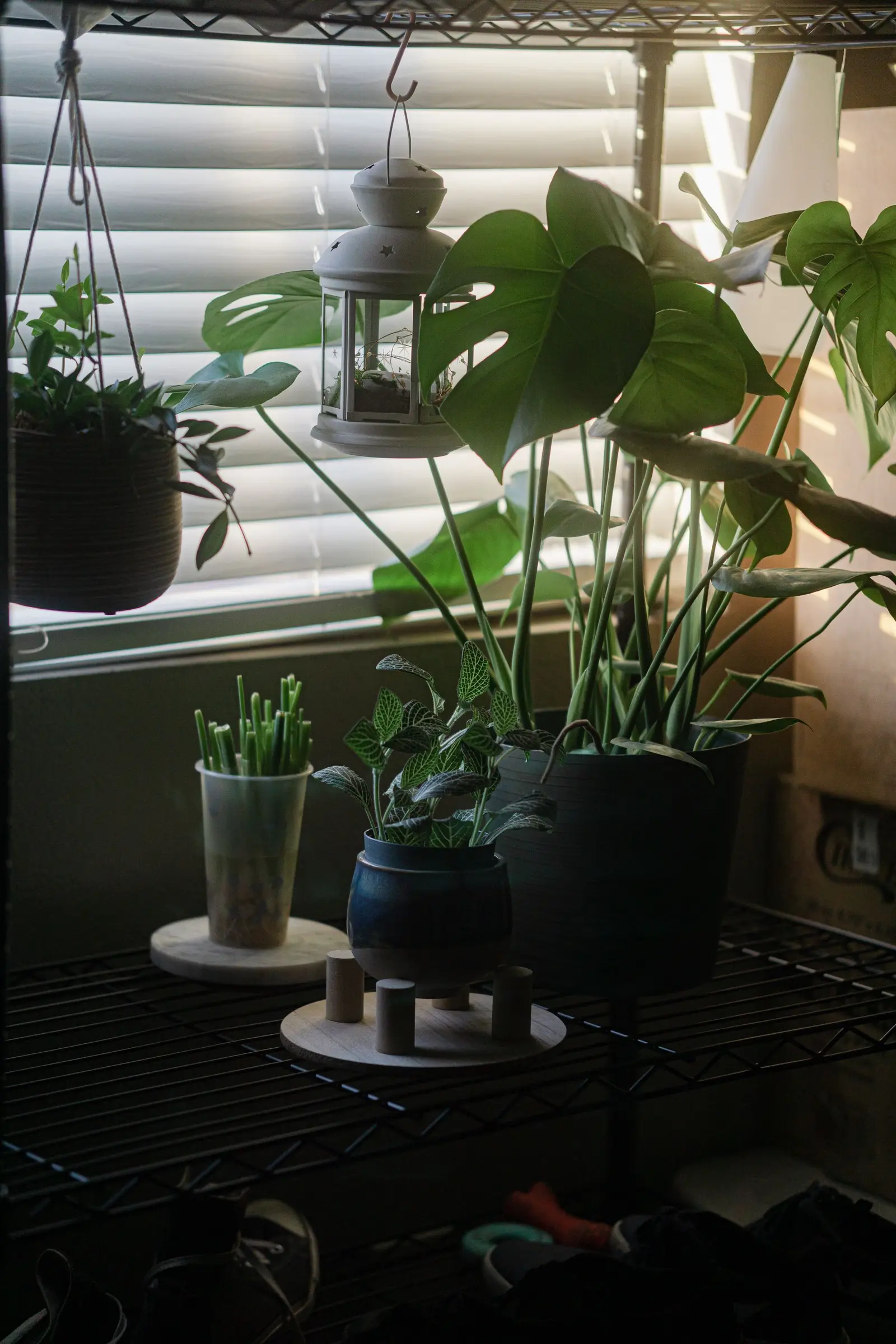
A quick check on a sunny day: hold your hand a foot above the shelf. A crisp, dark shadow means bright light. A soft, fuzzy shadow means medium light. Barely any shadow means low light. However, glass filters and redirects daylight, so a shelf mounted across a window receives far more usable light than one on the opposite wall, even when both are in the same room.
- Right next to a bright window: you can grow almost anything, including succulents and herbs on the sunniest spots.
- A few feet from a window, in a bright room: perfect for most trailing and leafy houseplants.
- Far from the window or in a dim corner: stick to true low-light plants, and consider a grow light.
If the shelf is dim, a small LED grow light fixes it. Place it 6 to 12 inches above the plants and run it 12 to 16 hours a day, following the Missouri Extension guidance. A clip-on bar under each shelf is usually enough for a small collection.
Need plant ideas for darker spots? Our list of low-light indoor plants covers what copes in dim rooms.
Match plant shape to shelf height
Different shapes belong on different levels, and this is what makes a shelf look intentional rather than random.
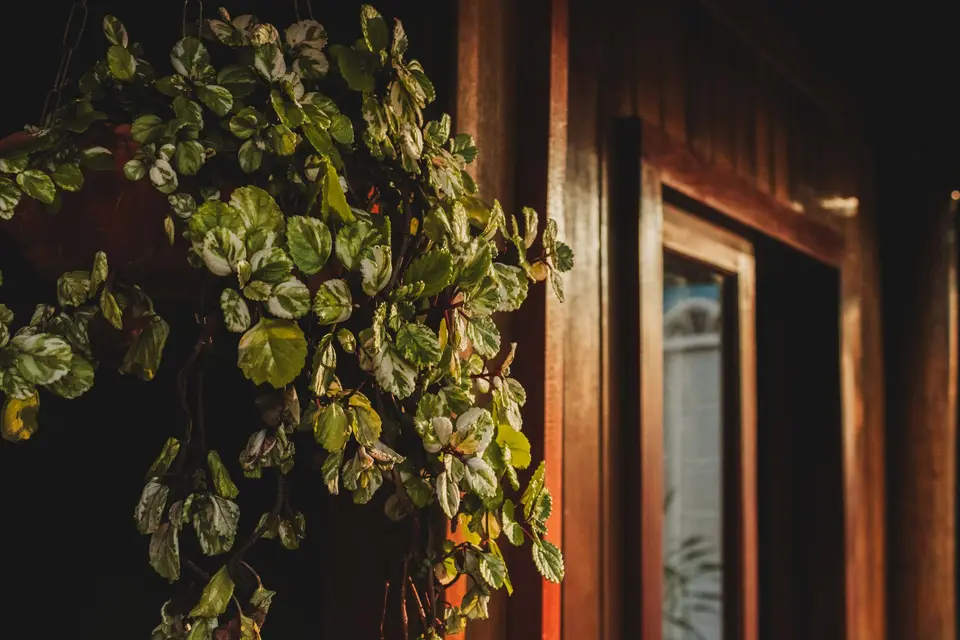
Top shelves: trailing plants. Vines that spill down are made for high spots. Try pothos, heartleaf philodendron, string of hearts or tradescantia. They soften the hard edge of the shelf and draw the eye up. A trailing plant placed up high also gets the most light, which suits these varieties.
Middle shelves: compact and bushy plants. These sit at eye level, so pick plants with interesting leaves: peperomia, calathea in good humidity, small snake plants, haworthia or ZZ plants. These are the plants you actually look at, so leaf shape matters more here than anywhere else.
Bottom shelves and the floor beside: bigger, upright plants. A tall snake plant or a small palm on the floor next to the shelf frames the whole arrangement and gives the eye a place to rest.
If you have pets, check toxicity before you commit to a spot. Our guide to pet-safe houseplants lists which varieties are safe for cats and dogs.
Use the triangle rule for height and rhythm
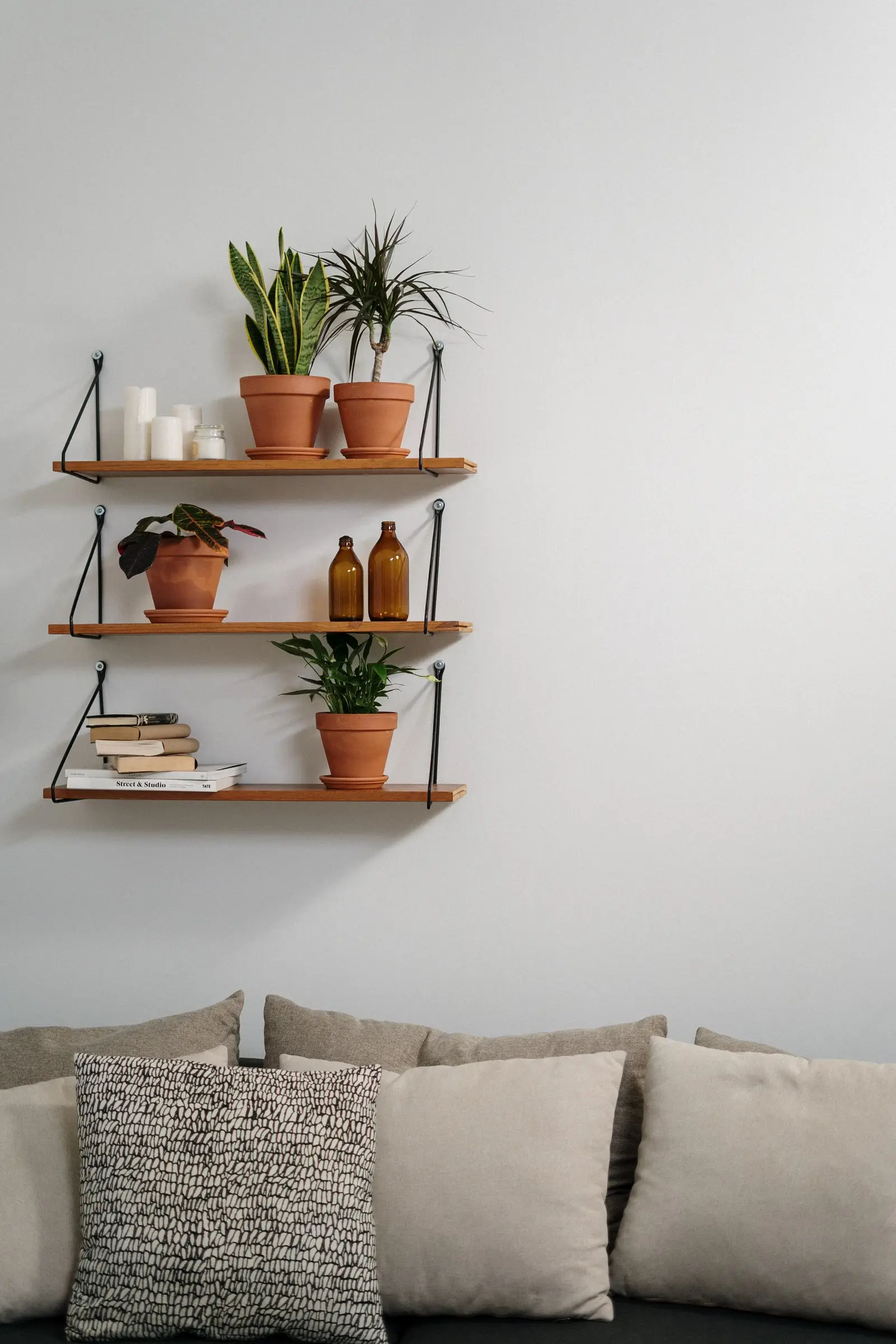
Rows of identical small pots look busy and flat. Think in triangles instead: on each shelf, group three things of different heights so the tallest sits to one side, then something medium, then something low.
For example:
- A trailing pothos (tall, hanging down) plus a stack of books plus a small round pot.
- A tall vase with dried grass plus a medium plant plus a candle.
Repeat the triangle on the next shelf, but flip the direction so the tall items zigzag across the bookcase. This creates rhythm without looking planned. The rule of threes shows up in design and photography for the same reason: three elements of different scale feel balanced where two feel stiff and four feel cluttered.
Low light is a spot where you can read comfortably during the day but the sun never touches the plant. A trailing plant is one whose stems grow long and hang down, such as pothos or string of hearts. A nursery pot is the thin plastic pot the plant comes in, which you slip inside a decorative pot.
Choose a pot palette
The fastest way to make a shelf look calm is to limit the pot colors. Pick two or three and stick to them:
- Terracotta plus cream plus natural wood for a warm, boho look.
- White plus matte black plus green leaves for something cleaner.
- Sage, blush and sand for a soft, earthy palette.
Variety in size and texture is good. Variety in color is what makes shelves look cluttered. If you already own mismatched pots, slip them into woven baskets or crochet covers so the shelf reads as one palette. Our crochet home decor ideas include easy pot covers that hide plain plastic.
Leave breathing room
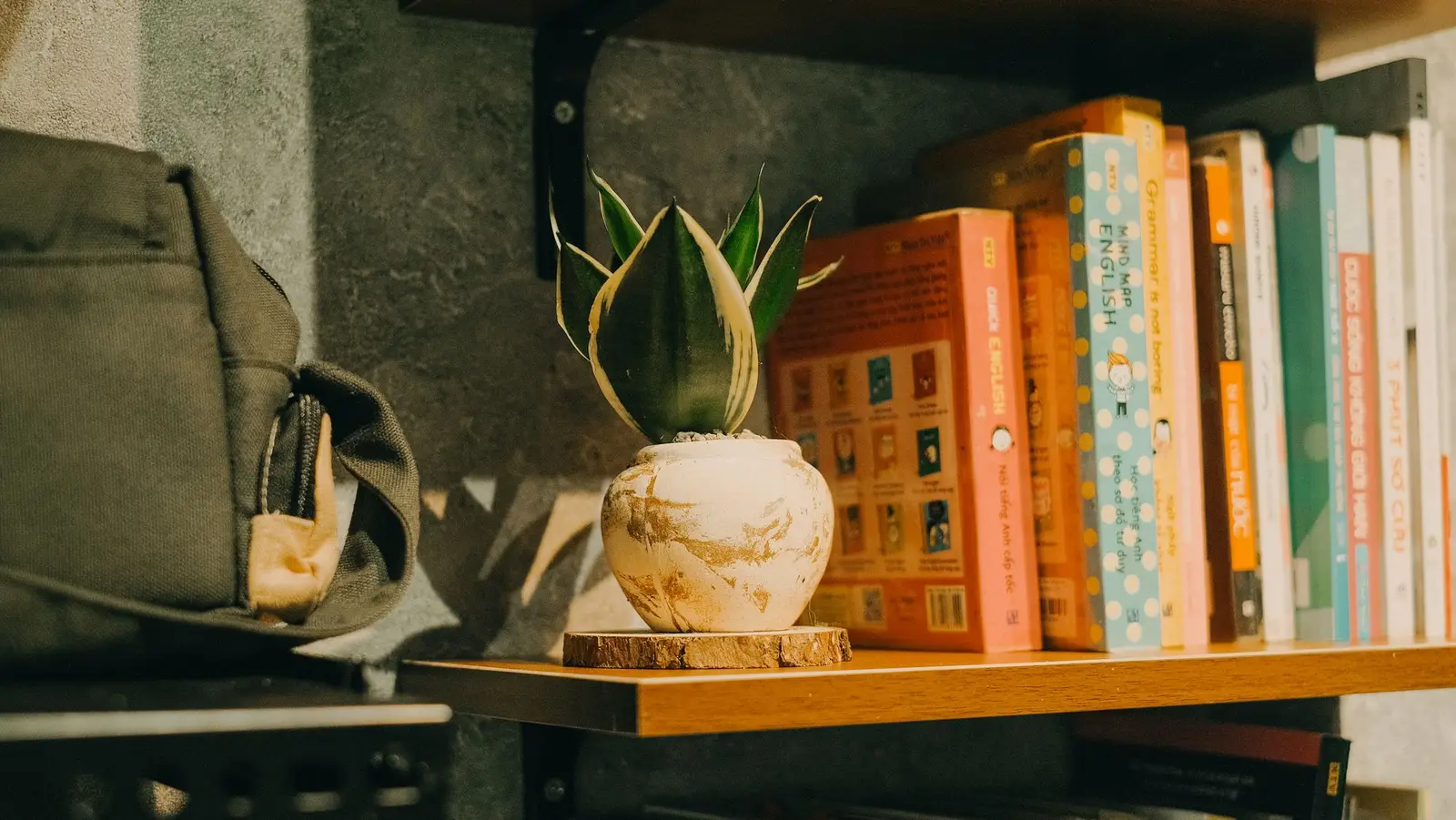
Resist the urge to fill every inch. Empty space lets each plant stand out, gives leaves room to grow, and lets air circulate, which helps prevent pests and mold. A common rule of thumb is that about one third of each shelf should be empty, with plants covering the other two thirds.
Spacing also keeps leaves from pressing together, which is where pests hide. If you cannot see where one plant ends and the next begins, you have gone too far.
Add books, baskets and handmade pieces
Plants look best surrounded by other textures. Mix in:
- Books, stacked horizontally as plant risers or standing upright as bookends.
- Woven baskets to hide plastic nursery pots.
- Handmade pieces: a crochet pot cover, a small macrame hanger, a hand-thrown ceramic bowl.
- One or two objects with meaning: a candle, a framed print, a vintage find.
Crochet pot covers are an especially easy win. They hide plain plastic pots, add warmth and are a quick beginner project. Browse our crochet home decor ideas for inspiration, or try one of our easy crochet projects for beginners.
Make watering painless
Your shelf only looks good if the plants stay alive, so plan for watering from the start:
- Keep plants in plastic nursery pots inside decorative pots, so you can lift them out.
- Put saucers or cork mats under every pot to protect the wood.
- Group plants with similar watering needs on the same shelf.
- Use a long-spout watering can for high spots.
Penn State Extension’s houseplant gear guide stresses that overwatering is the most common killer of indoor plants, and that it is worse in low light where soil stays wet longer. Check the soil with a finger before you water, and water less often on darker shelves. Once a week, take a quick walk past the shelf and water anything that is dry.
A sample layout for a three-shelf bookcase
Here is one way to put it together. Adjust the plants to match your light.
| Shelf level | Light | Plant shape | Pot and object mix |
|---|---|---|---|
| Top | Brightest | One trailing plant, such as pothos | One small upright plant and a stack of books as a riser |
| Middle | Medium | One compact bushy plant, such as peperomia | One decorative object and one small pot, with space between |
| Bottom | Lowest | One upright plant, such as a small snake plant | One trailing accent and a woven basket hiding a nursery pot |
The top shelf carries the trailing plant because it gets the most light and the vine has room to hang. The middle shelf holds the plant you look at most closely. The bottom shelf gets the most tolerant plant, since it is the darkest spot on the unit.
Common mistakes to avoid
- All small pots in a line. Use the triangle rule instead.
- Ignoring light. A beautiful plant in the wrong light will slowly decline.
- No drainage. Water pooling in a pretty pot with no hole is the fastest way to root rot.
- Too many colors. Two or three pot colors keep it cohesive.
- Crowding the shelf. Leaves pressed together trap moisture and invite pests.
- Candles near trailing vines or dried stems. Keep open flames and hot bulbs away from leaves and fabric; use LED candles on shelves if you want the glow.
- Grow lights too close to water. Keep fixtures dry and follow the maker’s distance guidance.
How we chose these recommendations
This editorial guide combines layout rules used by interior stylists with care information from university extension publications. Light distances and grow-light timing come from Penn State Extension’s houseplant article, and watering guidance comes from their houseplant gear guide. Plant suggestions are matched to the light levels those sources describe. Where a rule is a matter of taste, such as pot color or how much empty space to leave, it is labeled as a rule of thumb rather than a measured standard.
Methodology: each care claim was checked against the two extension publications above before publishing, and any number that could not be confirmed was dropped or stated as a rule of thumb.
Questions about a specific shelf or plant? Contact us and we will help you work it out.
Want more cozy decorating ideas? See our boho living room ideas and hanging plant ideas for small spaces. For more plant picks, browse easy indoor plants for beginners and pothos care.<|end|><|start|> fileList <|constrain|>xml<|message|><rfl:parameter name=“content”> … (see above)
Worth buying for a plant shelf
-
A mix of terracotta and ceramic pots in 3 sizesBiggest impact
Terracotta adds warmth and lets soil breathe; matte ceramic adds calm. Three sizes give you instant height variation.
-
Waterproof saucers or cork mats
Protect wooden shelves from drips and watering rings.
-
A clip-on or bulb-style LED grow light
Lets you keep plants on a shelf that's far from the window.
-
Woven baskets or crochet pot covers
Soften plastic nursery pots and bring texture to the shelf.
-
Small adhesive hooks
For guiding trailing vines along the edge of a shelf.
Frequently asked questions
What plants are best for shelves?
Trailing plants like pothos, heartleaf philodendron and string of hearts look best on high shelves. Compact plants like peperomia, haworthia and small snake plants suit middle shelves. Choose based on how much light the shelf gets.
Can plants live on a shelf away from a window?
Only low-light tolerant plants, and even they grow slowly without a light source. For a shelf more than a few feet from a window, add an LED grow light on a timer.
How do I water plants on a high shelf?
Use a long-spout watering can and keep plants in nursery pots with saucers. Or take the pot down once a week and water it in the sink, letting it drain before putting it back.
How many plants should I put on one shelf?
Leave space. A good starting point is one or two plants per shelf section, mixed with books and objects, so each plant has room to breathe and be seen.
Sources
- The Argument for Houseplants— extension.psu.edu
- To Buy or Not to Buy - The Gear Your Houseplants Really Need— extension.psu.edu
First published
Photo credits
Thank you to Mathias Reding, Li Sun, chickenbunny, cottonbro studio and Pew Nguyen for sharing these photographs.