Pothos Care Guide: Light, Watering, Golden Pothos and Yellow Leaves
Pothos care in plain numbers: light by window, when to water, golden pothos tips, and a yellow-leaf table that names the fix.

A short hands-on demo of where to cut leggy pothos vines so the plant grows back bushier instead of stringy.
Pothos (Epipremnum aureum) thrives on pothos care that is simple to check: bright, indirect light a few feet from an east or west window, water only when the top 2.5 cm (1 inch) of soil is dry (often every 1 to 2 weeks in spring and summer), an airy, well-draining mix in a pot with a drainage hole, and normal room humidity. It prefers 50 to 70 percent humidity but copes with 30 to 60 percent. Golden pothos, the classic green-and-yellow variety, follows the same rules and is the toughest of the common types. Most problems people blame on “a black thumb” come from watering on a calendar instead of testing the soil, or from a pot with no drainage.
This guide covers golden pothos specifically, a symptom table for yellow leaves, and the pruning and support routine that turns one long vine into a fuller plant.
Key Takeaways
- Water when the top inch (2.5 cm) of soil is dry, not on a fixed day of the week; winter and low light stretch the gap to 2 to 3 weeks.
- Bright, indirect light means near an east or west window, or behind a sheer at a south window. Direct summer sun scorches; deep shade fades variegation and stretches the vines.
- Several yellow leaves plus damp soil almost always means overwatering. One old base leaf yellowing is normal aging.
- Pothos is toxic to cats, dogs and horses (ASPCA). Keep it out of reach or choose a pet-safe houseplant.
- Fuller plants come from pruning leggy vines, brighter light, and letting new growth climb or fill back into the pot.
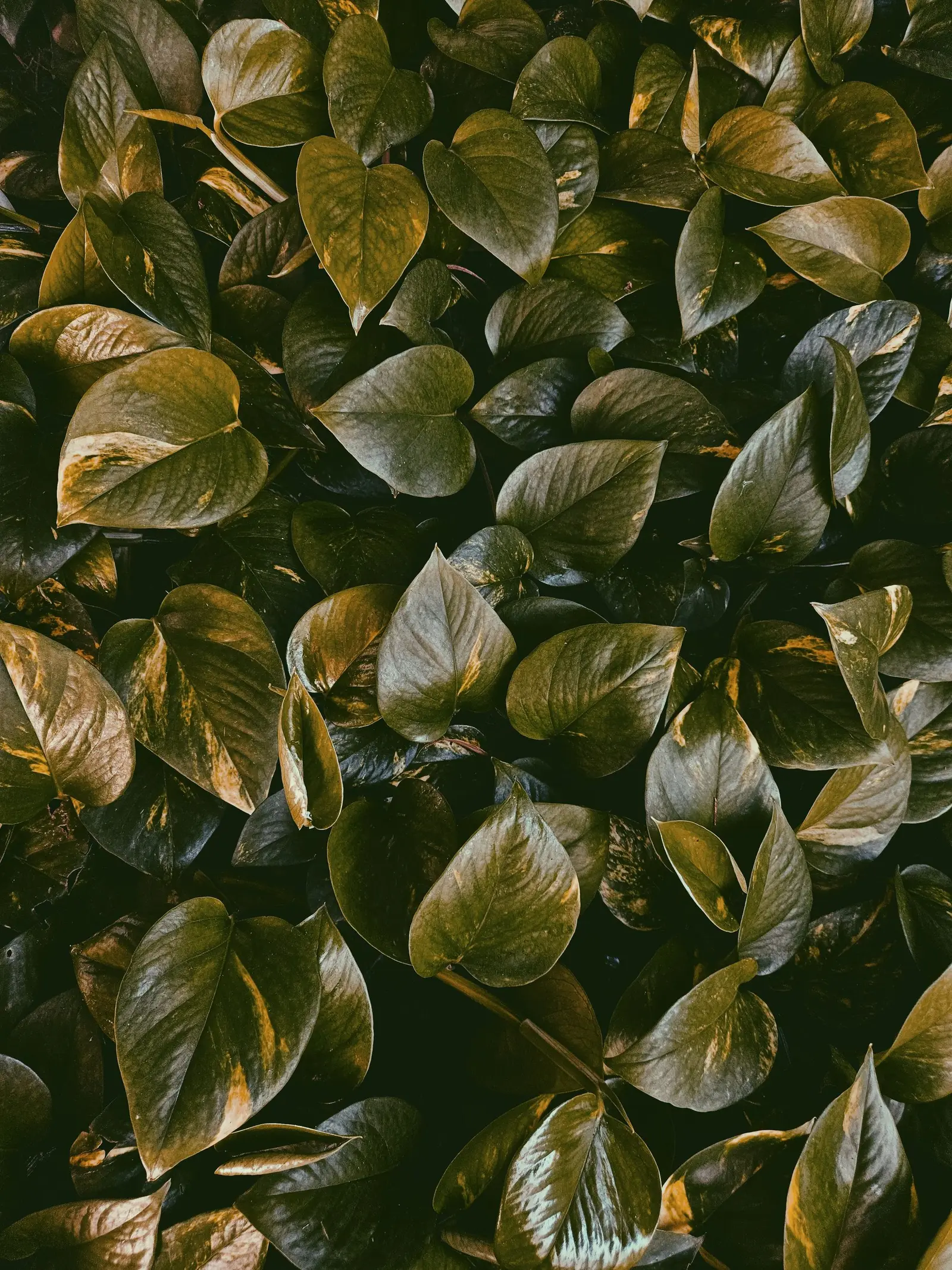
Healthy pothos leaves are glossy and firm; dull or soft leaves are your first warning sign.
Meet the plant (and the variety you probably own)
Pothos is a tropical climbing vine in the arum family. In the wild it scrambles up tree trunks with aerial roots; indoors it trails from a shelf or climbs whatever support you give it. You will also see it sold as devil’s ivy, because it stays green even in tough conditions (NC State Extension).
Golden pothos is the variety in almost every garden center: heart-shaped green leaves streaked with yellow, fast growth, and the highest tolerance of the common cultivars. Clemson’s 2026 grow guide lists it as the standard Epipremnum aureum type, often labeled devil’s ivy or hunter’s robe.
Other common varieties, all true E. aureum unless noted:
- Marble Queen and Snow Queen: heavy cream and white marbling. They want more light than golden pothos to keep the pattern.
- Neon: solid chartreuse. Thinner leaves, grows quickly, tolerates dimmer spots.
- Pearls and Jade, N’Joy, Manjula: smaller leaves with crisp white and green. Manjula grows slower and stays bushier.
- Cebu Blue: not E. aureum but Epipremnum pinnatum. Silvery-blue, more pointed leaves. Care is very similar.
Two plants often sold as “pothos” are not true pothos: satin pothos is Scindapsus pictus, and heartleaf philodendron is Philodendron hederaceum. Philodendron leaf stems are smooth; pothos stems have a groove down one side (Clemson).
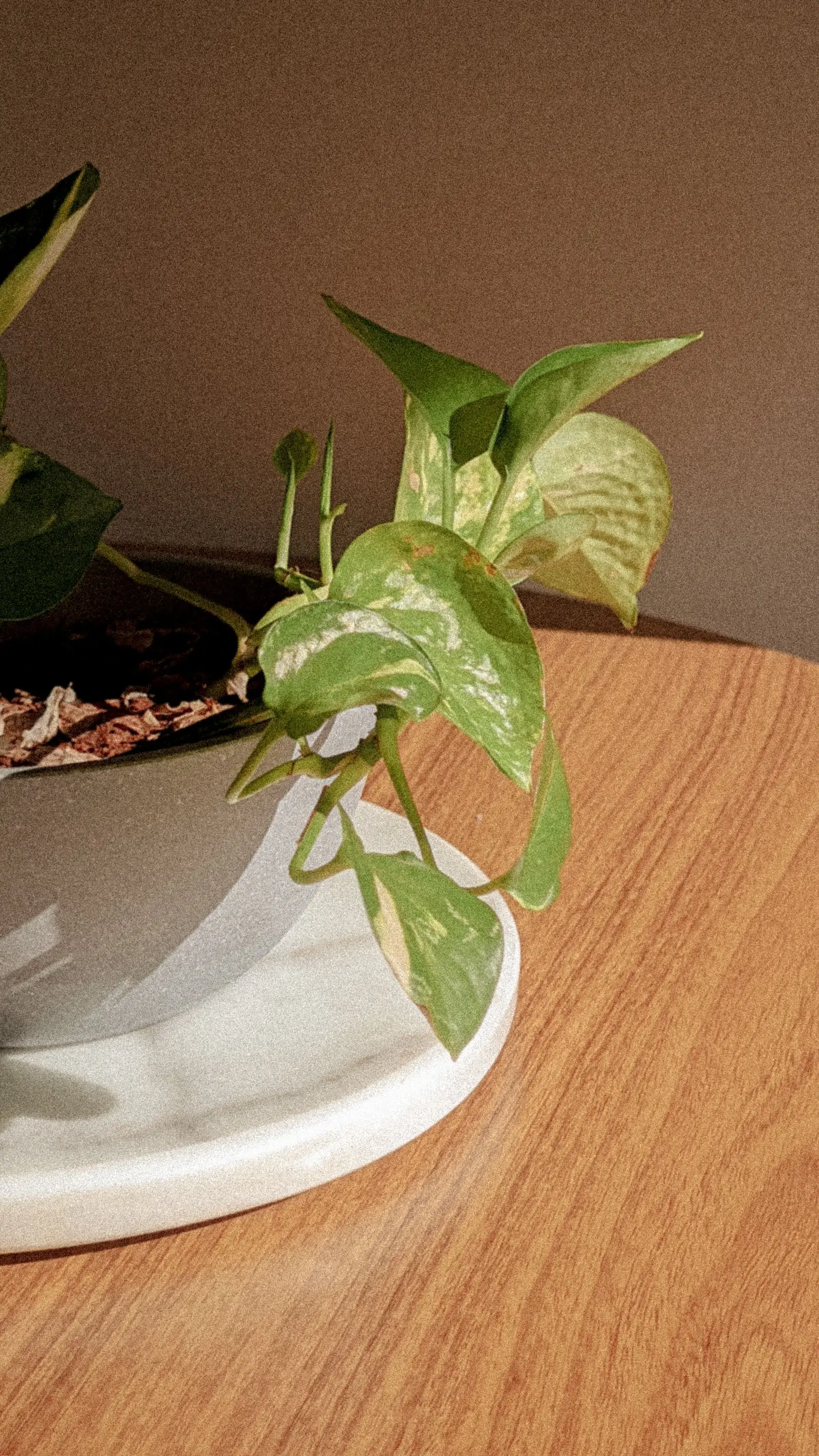
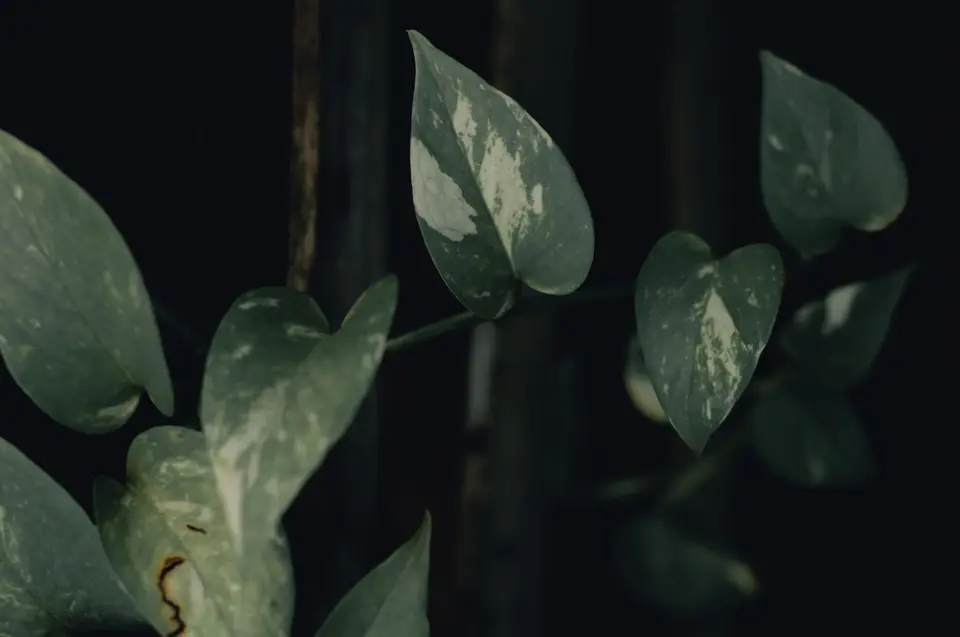
Golden pothos: green leaves with yellow streaks, the toughest common variety for beginners.
How to care for golden pothos
Golden pothos is the forgiving default, but it still has preferences you can check in your own room.
- Light: east or west window within a few feet, or a south window behind a sheer curtain. It keeps yellow streaks in lower light better than white cultivars, but growth slows and the internodes (gaps between leaves) stretch.
- Water: same soil test as every pothos: dry top 2.5 cm (1 inch), then water thoroughly until it runs from the drainage hole. Empty the saucer after 15 minutes.
- Soil and pot: airy, well-draining mix; drainage hole is not optional.
- Temperature: about 18 to 30 C (65 to 86 F). Clemson gives 15 to 21 C (60 to 70 F) at night and 21 to 29 C (70 to 85 F) by day. Keep it off cold winter windowsills and away from heating vents.
- Humidity: prefers 50 to 70 percent; average homes sit at 30 to 60 percent and golden pothos copes (Clemson). No humidifier required unless the leaves crisp up near a heater.
- Feeding: sources disagree on frequency. Clemson and NC State suggest a houseplant fertilizer every other month in spring and summer; the RHS suggests once a month. Either way, dilute and skip winter.
If you want the same toughness without variegation fuss, golden pothos is the one to buy. For plants that survive genuinely dark rooms, see our low-light indoor plants list, where pothos also appears with honest limits.
Light: what “bright indirect” means in a real room
“Bright, indirect light” is only useful if it maps to a window. For pothos:
| Spot | What the plant gets | Expect |
|---|---|---|
| East window, within a few feet | Gentle morning sun, bright rest of day | Best everyday balance for most cultivars |
| West window, a few feet back | Stronger afternoon sun | Good growth; pull back if leaves pale or scorch |
| South window behind a sheer or blinds | High light without hot rays on the leaves | Strongest growth; best for Marble Queen-type variegation |
| North room or center of a bright room | Low to medium light | Survives; slower, leggier, less variegation |
| Dark corner with no window light | Almost nothing | Will decline. A grow bulb on a 10 to 12 hour timer is the fix |
The RHS also warns against full summer sun on the leaves, which scorches them, and against deep shade, which weakens growth and color. Rotate the pot a quarter turn every week or two so one side does not go bare.
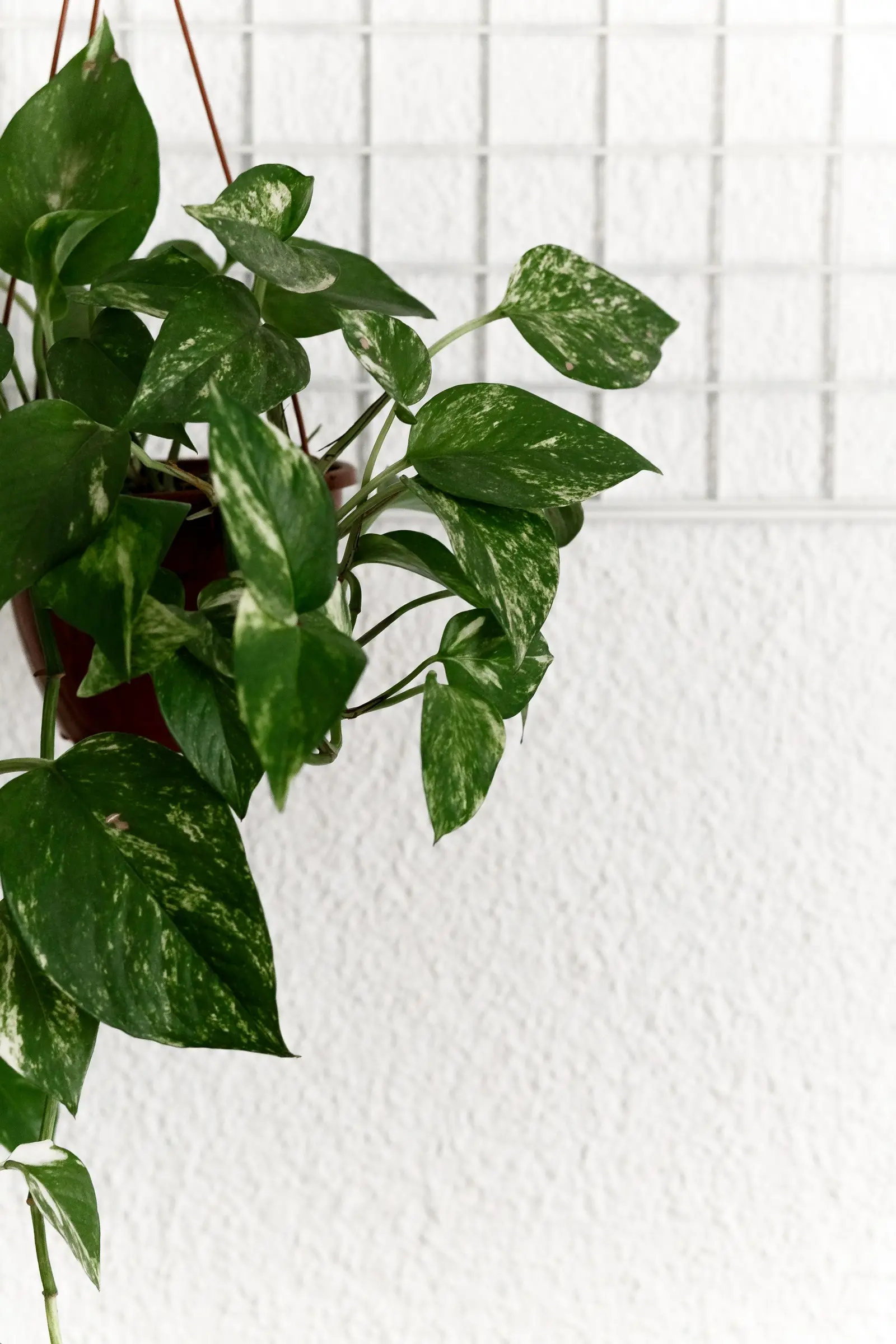
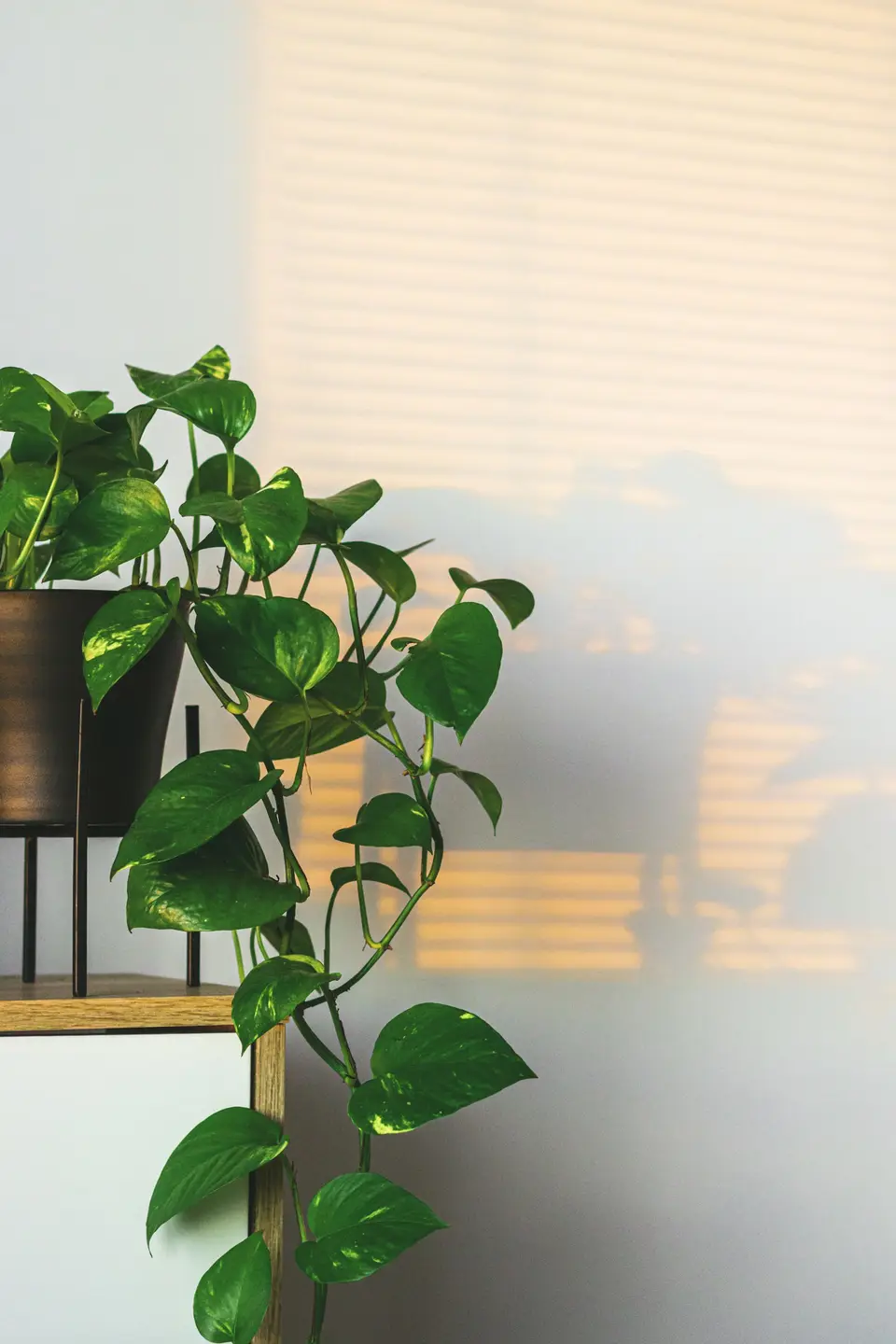
A hanging spot near a bright window keeps vines visible and, in pet homes, out of reach.
Watering: the soil test beats the calendar
More pothos die from too much water than too little. The rule every extension source agrees on: let the soil dry between waterings, then water thoroughly so moisture reaches all the roots (Clemson; RHS; NYBG).
How to check without gadgets:
- Push a finger into the mix about 2.5 cm (1 inch). If it comes out dry and crumbly, water. If it clings damp, wait.
- Water until it streams from the drainage hole. If the pot has no hole, you are guessing; switch to a nursery pot inside a cover pot.
- Empty the saucer after 15 minutes. Roots sitting in water is how root rot starts.
- In winter, or in a north-facing room, the mix dries much slower. NYBG’s guidance for the low-light months (roughly October to February) is to water only often enough to stop the soil drying out completely.
Rough intervals for a typical 15 to 20 cm pot in an east-window room: every 7 to 14 days in spring and summer, stretching to 14 to 21 days in winter. A small pot in bright light can dry in five days; a large plant in a decorative cover pot in a dim room can go a month. The soil test always wins.
Signs you have watering wrong:
- Limp leaves, dry soil: thirsty. Water deeply; the plant usually firms up within a day.
- Yellow leaves, damp soil: too much water. Stop, let the mix dry, and check drainage.
- Black, mushy stems at soil line or a sour smell: root rot from constant wet. Act today (see the symptom table).
RHS also suggests rainwater or filtered water at room temperature if your tap is very hard, to keep the mix from slowly going alkaline.
Soil, pots and feeding
Use any well-draining indoor potting mix. If yours stays wet for days after watering, cut it with a handful or two of perlite so air gets back to the roots. The RHS describes the ideal as open, moisture-retentive but well-drained, slightly acidic; a standard bagged mix plus perlite gets you there without a recipe.
The pot must drain. Decorative pots without holes are fine as cover pots only.
Repot when roots circle the bottom, poke out of the drainage hole, or the plant dries out within a day or two of watering. Clemson says most plants need this once every year or two; the RHS allows every two to three years for slower growers. Move up only one pot size, about 5 cm (2 inches) wider. A pot that is too big holds wet soil longer and recreates the overwatering problem.
Feed with a balanced liquid houseplant fertilizer in spring and summer only, at half strength if the label does not say otherwise. Skip winter. Yellowing on a plant that is otherwise dry and bright can be low fertility rather than watering trouble (Clemson); feed before you change anything else.
Yellow leaves: diagnose by symptom
Yellow leaves are the number one pothos complaint on plant forums, and the cause is not always overwatering. Work down this table and run the check before you act.
| What you see | Most likely cause | Quick check | Fix |
|---|---|---|---|
| Several leaves yellow at once, soil still damp days after watering | Overwatering, possible root rot | Finger test 2.5 cm down; slide the plant out and look for brown, soft roots | Stop watering; let the mix dry; trim rotten roots and repot in dry, airy mix if needed |
| One or two old leaves at the base yellow, plant otherwise firm and growing | Normal aging | Is it the oldest, lowest leaf on an otherwise healthy vine? | Remove the leaf. No change to care needed |
| Pale or yellow patches on the side that gets harsh sun | Leaf scorch from direct light | Are those leaves in a beam of afternoon sun for hours? | Move back from the glass or add a sheer curtain |
| Whole plant pale, little new growth, older leaves yellowing slowly | Low fertility | When did you last feed? Growing season only? | Feed half-strength every month or every other month through spring and summer |
| Yellowing after a cold snap or near a drafty window | Cold damage | Is it sitting on a cold sill or next to an AC vent? | Move away from the window and vents; no fertilizer until growth resumes |
| Yellow, soft leaves with fine webbing under them | Spider mites in dry air | Look at leaf undersides in bright light | Wipe leaves; treat with insecticidal soap if webbing continues |
Clemson lists overwatering and low fertility as the leading causes of yellow leaves; NC State and UW-Madison note that older leaves yellowing and dropping over time is ordinary. If several yellow leaves appear after the plant has grown long bare vines, pruning may be the real fix (more below).
Other problems worth catching early
Brown, crispy tips or edges. Usually dry air near a heater or swings between soggy and bone-dry soil. Clemson also links tip dieback to low humidity or intense light. Water more consistently and move the pot off the radiator shelf.
Leggy vines with tiny leaves and long gaps. Not enough light. Move the plant closer to a window and prune the bare stems. Fertilizer will not shorten internodes on a plant living in a dim corner.
Variegation fading to plain green. Low light again, especially for Marble Queen and Snow Queen. Brighter indirect light restores pattern on new leaves; old leaves stay as they are.
Root rot. Stems mushy at the soil line, soil that smells sour, leaves yellowing while the mix stays wet. Unpot, cut away brown soft roots with clean scissors, and repot into dry, well-draining mix. Water less from then on. Take a few healthy cuttings as backup in case the main plant does not recover.
Pests. Pothos is fairly pest-resistant indoors, but check under leaves now and then for mealybugs (white fluff in joints) or spider mites (fine webbing). Wipe with a damp cloth and treat with insecticidal soap if needed.
Fuller, lusher growth: prune, brighten, support
A thin pothos with one long bald vine is usually a light and pruning problem, not a mysterious disease. Three levers, in the order that matters:
1. Prune the leggy vines. NC State’s grow guide says to prune stems back to keep a bushy habit. Cut a long vine a few leaves above the pot, just below a leaf node. The plant responds by pushing side shoots lower down. Do not throw the cut piece away: a stem with two to four leaves and at least one node roots easily in water (Clemson), and you can plant it back into the same pot to fill the bare soil. Full step-by-step propagation is a guide of its own; the short version is cut below a node, bare the bottom leaf, stand the cutting in water, and pot it once roots are several centimetres long.
2. Raise the light. Brighter indirect light shortens the gaps between leaves and sizes up new foliage. If the window is as close as it gets, a full-spectrum bulb on a timer for 10 to 12 hours a day is enough for most rooms.
3. Give it something to climb or a plan for the vines. In nature, pothos roots into tree trunks and produces much larger, sometimes fenestrated leaves. Clemson notes that a moss pole or wooden rod indoors mimics that climb and allows bigger leaves. For a trailing look instead, train vines along a shelf with small adhesive hooks or hang the pot so growth spills down rather than crawling across the floor. More layout ideas are in our guides to styling plants on shelves and hanging plant ideas.
Propagation in one short paragraph
Pothos roots from stem cuttings in water or soil, as long as the piece has at least one node (Clemson). That is how you make a thin plant look lush: root the pruned vines, then plant them back into the original pot. Change the water weekly and keep the glass in bright, indirect light. Roots usually appear within a few weeks. If you want the full technique with photos, that walkthrough belongs in a dedicated propagation guide rather than repeated here.
Pothos and pets
The ASPCA lists devil’s ivy (Epipremnum aureum) as toxic to cats, dogs and horses. All parts contain insoluble calcium oxalate crystals. Chewing the leaves can cause oral irritation, pain and swelling of the mouth, tongue and lips, excessive drooling, vomiting, and difficulty swallowing.
There is no home remedy to recommend beyond keeping the plant out of reach. If a pet has chewed pothos, call your veterinarian or the ASPCA Animal Poison Control Center at (888) 426-4435. A consultation fee may apply.
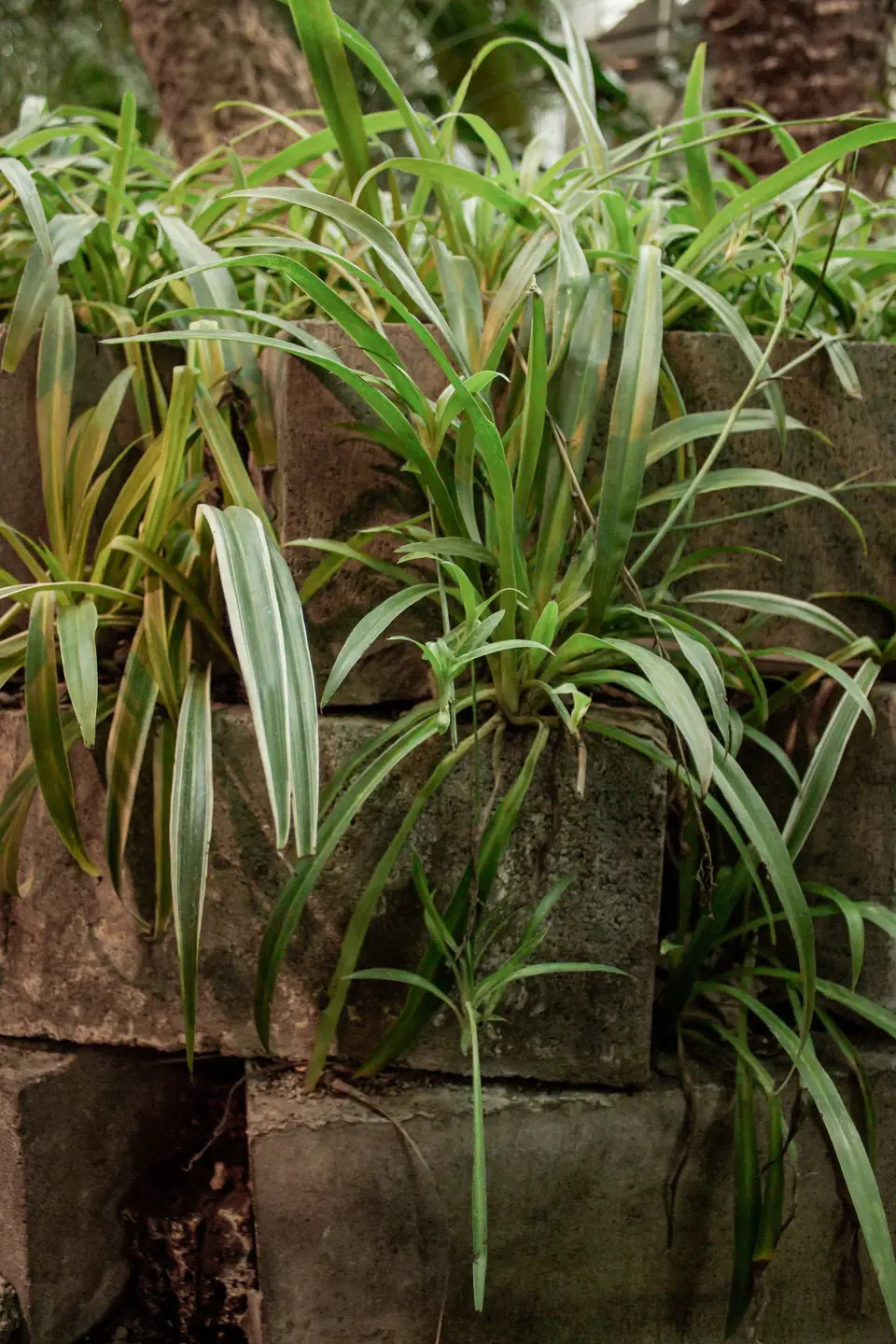
In homes with curious cats or dogs, hang the pot, put it on a high shelf the pet cannot jump to, or swap for a pet-safe houseplant such as spider plant, parlor palm or calathea.
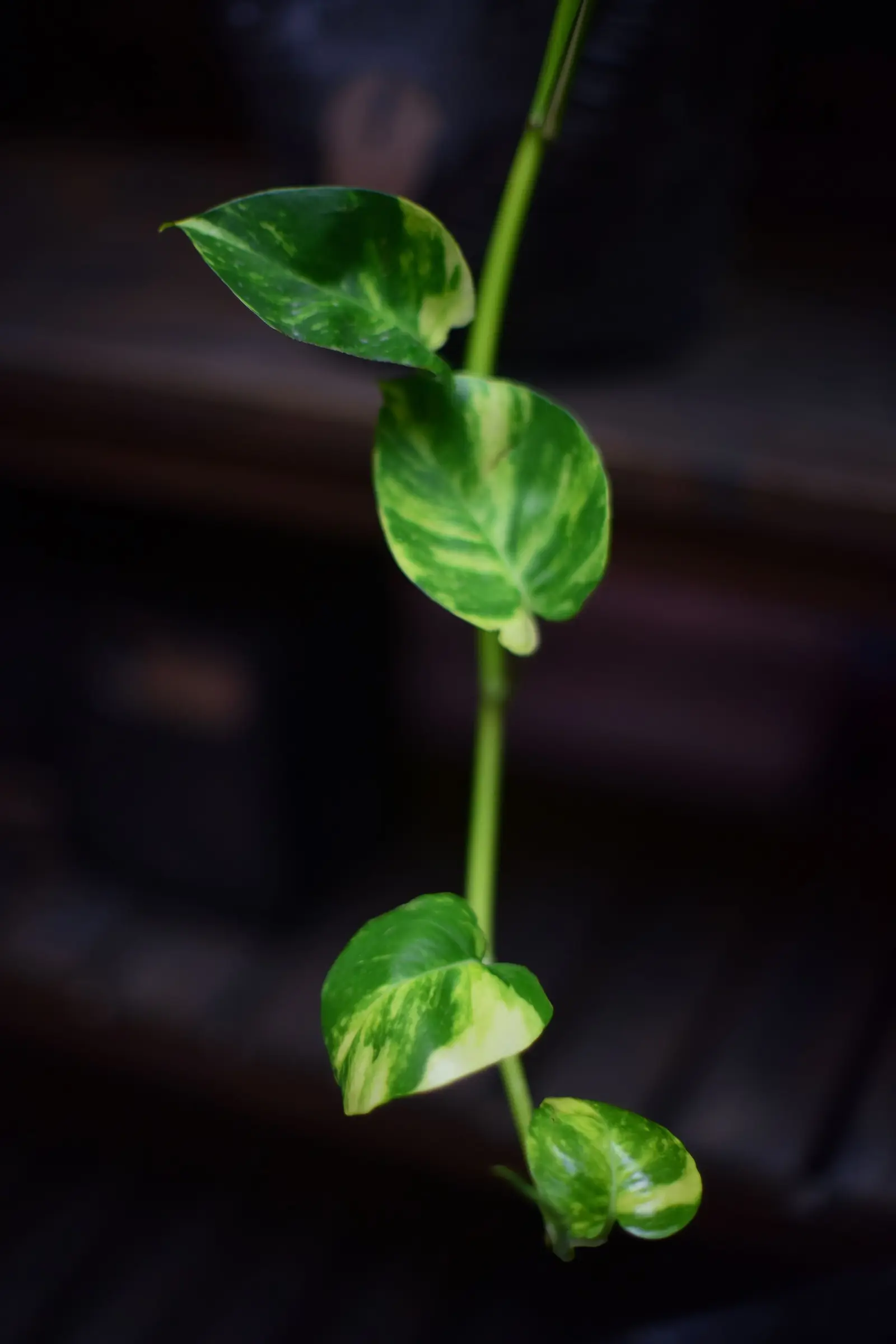
Variegated vines look best in brighter indirect light; move a fading plant closer to the window.
Styling a pothos in a cozy room
Pothos is made for trailing, which is why it shows up in almost every guide to layered, lived-in interiors:
- Spill it over a bookshelf or the top of a kitchen cabinet.
- Hang it near a bright window in a macrame or crochet hanger.
- Train a single vine along picture rails with clear hooks for a living garland.
- Group it with other easy indoor plants for beginners on a plant shelf that still gets morning light.
Browse more plants in the plants category, or start with the beginner list if you are still building a collection.
Frequently asked questions
How often should I water a pothos?
Water when the top 2.5 cm (1 inch) of soil is dry, often every 1 to 2 weeks in the growing season and every 2 to 3 weeks in winter or low light. Always check the soil. Pots with drainage holes make overwatering far less likely.
Why do pothos leaves turn yellow?
Overwatering is the usual suspect when several leaves yellow and the soil stays wet. One old leaf yellowing at the base is normal aging. Direct sun, cold drafts, low fertility and root rot can also yellow leaves; use the symptom table above to separate them.
Can pothos grow in a bathroom with no direct sun?
Yes. Bathrooms often give the bright, humid, indirect light pothos likes, as long as there is a window or strong artificial light. Without any light source, no pothos will live. Our low-light guide covers dark rooms and grow bulbs.
Is golden pothos safe for cats and dogs?
No. Golden pothos is Epipremnum aureum, which the ASPCA lists as toxic to cats, dogs and horses. Keep it out of reach, or choose plants from our pet-safe houseplants list.
How do pothos plants grow bigger leaves?
Give it brighter indirect light and something to climb, such as a moss pole. Clemson notes that climbing growth on a support is how the plant develops larger leaves indoors. Trailing growth in dim light stays small and long.
Should I use a moisture meter instead of my finger?
A meter helps while you learn, but a finger test in the top 2.5 cm is enough for pothos. If you use a meter, read at root depth, not just the surface, and do not water until that layer is dry.
Worth buying for a happy pothos
-
Nursery pot with drainage + a decorative cover potMost useful
Keep the plant in its plastic pot and drop it inside a prettier one. Easy to water, no soggy roots.
-
Indoor potting mix with perlite
Drains fast so roots do not sit in water.
-
Long-spout watering can
Gets water to the soil under trailing vines without splashing leaves.
-
Clear glass propagation vases
Makes rooting cuttings in water easy and lets you watch the roots grow.
-
Adhesive wall hooks or a ceiling hook
For training vines along a shelf or hanging the plant out of pets' reach.
Frequently asked questions
How often should I water a pothos?
Water when the top 2.5 cm (1 inch) of soil feels dry, which is often every 1 to 2 weeks indoors in spring and summer. In winter, or in a dim corner, the mix can take 2 to 3 weeks to dry. Check the soil with a finger instead of following a fixed calendar.
Why do pothos leaves turn yellow?
The most common cause is overwatering, especially if several leaves yellow at once and the soil stays damp. One older leaf near the base yellowing now and then is normal aging. Use the symptom table in this guide to tell those cases apart before you change anything.
Can pothos live in a room with no windows?
Not long-term in total darkness. Pothos tolerates low light and can live under bright artificial light such as an LED grow bulb or office lights left on during the day, but it needs some light source to survive.
Is pothos toxic to cats and dogs?
Yes. The ASPCA lists pothos (devil's ivy) as toxic to cats, dogs and horses. It contains insoluble calcium oxalate crystals, which irritate the mouth and can cause drooling, vomiting and difficulty swallowing if chewed. If your pet eats any part of the plant, call your vet or the ASPCA Animal Poison Control Center at (888) 426-4435.
How do you make a pothos plant fuller?
Prune long vines just after a leaf node, give the plant brighter indirect light so the gaps between leaves stay short, and root the cuttings in water before planting them back into the same pot. A moss pole or wall training also pushes growth upward instead of into one thin trailing strand.
Does golden pothos need more care than other pothos?
Golden pothos is the toughest common variety. Heavily white cultivars such as Marble Queen need brighter light to keep their pattern, while golden pothos keeps its yellow streaks in lower light. Watering, soil and pet safety are the same across true Epipremnum aureum varieties.
Sources
- Clemson HGIC 1568: How to Grow Pothos Indoors (Epipremnum spp.)— hgic.clemson.edu
- RHS: How to grow epipremnum— rhs.org.uk
- ASPCA: Devils Ivy (Epipremnum aureum) toxic plant profile— aspca.org
- NC State Extension: Epipremnum aureum (devil's ivy, golden pothos)— plants.ces.ncsu.edu
- NYBG Mertz Library: How much light and water does pothos need?— libanswers.nybg.org
First published
Photo credits
Thank you to Ja Kubislav, Daniel Maurício Bertoli, Nataliya Vaitkevich, Sóc Năng Động, ana moura and Rumeysa Demir for sharing these photographs.