Peace Lily Care: Fix Droopy Leaves and Brown Tips
Peace lily care indoors, starting with droopy leaves and brown tips: a symptom-to-cause table, light, watering, flowering, repotting and pet safety.
Peace lily care comes down to even moisture, bright indirect light and no direct sun. Most droopy leaves mean the soil dried out too far or the roots are sitting in too much water, and most brown tips come from overfeeding, drying out or chlorinated tap water. Test the soil before you do anything else: a peace lily that droops over dry soil needs a thorough drink, while one that droops over wet soil needs its roots checked.
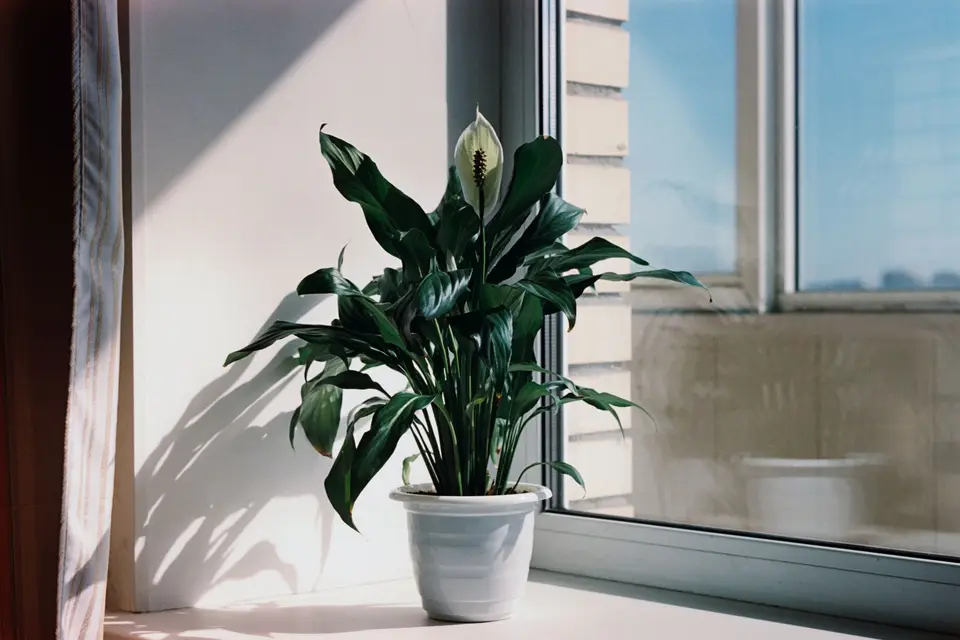
The cover shows a peace lily in a white pot catching window light.
This guide is about Spathiphyllum, the indoor peace lily sold as a houseplant. It answers the question most people search, peace lily care indoors, in the order you meet the problems: symptoms first, then the routine that prevents them.
Key Takeaways
- Drooping plus dry soil: water thoroughly. Drooping plus wet soil: inspect the roots before adding anything.
- Brown tips never recover. Fix the cause and judge the plant by new leaves.
- Bright indirect light keeps it healthy and flowering; direct sun scorches it.
- It is toxic to cats and dogs according to the ASPCA.
What your peace lily is telling you
Work down this table from the top. The rows run from the checks to make first to the ones to make last, and the last column is the check that tells neighbouring causes apart.
| What you see | Most likely cause | The check that confirms it |
|---|---|---|
| Whole plant limp, soil dry well below the surface | Dried out too far. Clemson says excessive drying makes the plant wilt, and leaves and edges can turn yellow | Pot feels light; a finger 2.5 cm (1 inch) down finds dry mix. It perks up after a thorough watering |
| Limp, soil still wet | Overwatering or poor drainage damaging roots; Clemson links root and stem disease to overwatering | Slide the plant out of the pot. Maryland’s extension service says to look for black, mushy roots |
| Brown tips and edges, soil kept very wet or left bone dry | Watering extremes. The Maryland answer names overwatering and poor drainage | Does the pot have holes, and does water sit in the saucer? |
| Brown tips, regular feeding | Fertilizer burn. Clemson says overfertilizing can make leaf tips and roots burn and turn brown | Count your feedings. More often than every six to eight weeks in the growing season is too much |
| Brown tips only, watering and feeding are fine | Chlorine in tap water. The Maryland answer says peace lilies are sensitive to it where water is heavily chlorinated | Let a jug of water stand overnight and use that for a few months; watch the new leaves |
| Scorched, crispy patches on the side facing the window | Direct sun. Both Clemson and the Maryland answer say direct sun burns the foliage | Patches line up with where the sunbeam lands |
| Yellow between green veins | Magnesium deficiency, listed by Clemson | Pattern is on the leaf blade, not the tip |
| Webbing, cottony bits or tiny flies | Pests: Clemson lists fungus gnats, mealybugs, spider mites and scale | Look under leaves and at the base of stems with a flashlight |
| Healthy leaves, no flowers | Plant under a year old, or not enough light (Clemson) | Check its age and the light, see below |
Pests come last on purpose. Clemson ties root and stem disease to overwatering, so rule out water and roots first unless you can see an insect.
Droopy leaves: the two-minute test
Clemson says a peace lily that dries out excessively will wilt, which gives you a test. Lift the pot: a light pot and a dry finger-test means water it. Take it to the sink, water slowly until it drains from the holes, and let it drain completely.
If it stays limp or collapses again while the soil is wet, stop watering and unpot it. Firm roots mean the problem is elsewhere (heat, a draught from a vent, light). Black, mushy roots mean trimming them away and repotting into a clean pot with drainage holes, the steps the Maryland extension answer gives. Water lightly afterwards and wait for the top of the mix to dry before the next drink.
Brown tips: remove them, then change one thing
Brown tissue does not turn green. Cut it off following the leaf’s shape if you like, and remove badly affected leaves at the base. Then change one variable at a time, starting with the likeliest in the table, and judge the result on the next leaves that unfurl. Changing five things at once leaves you not knowing which one worked.
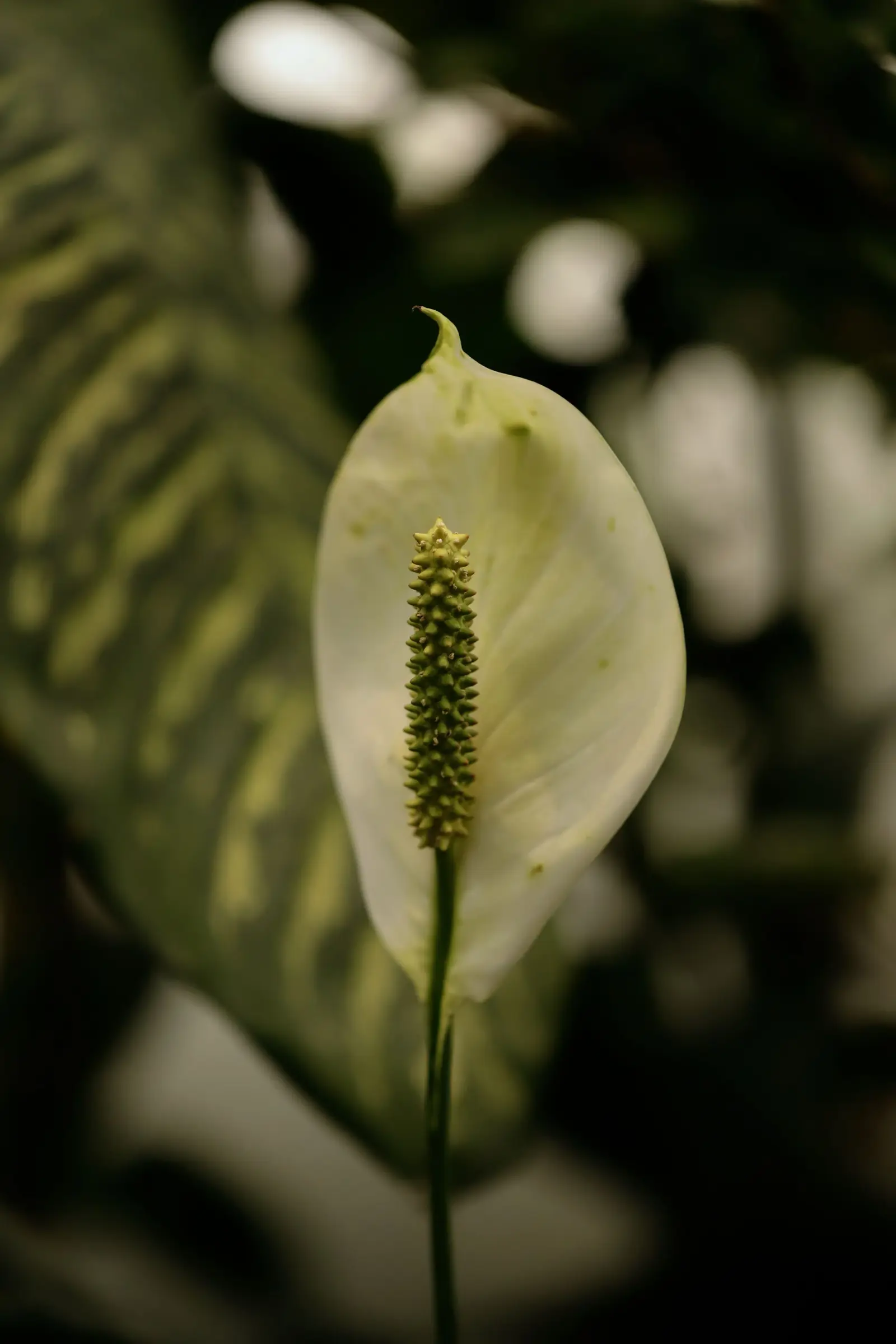
A peace lily with a white bloom among green leaves.
Watering rhythm
Keep the mix moist but not soggy, and let it dry out slightly between waterings. That is the Clemson factsheet wording, and it is the best summary of a peace lily’s tolerance: it dislikes both extremes. UF/IFAS says the same thing more briefly, that peace lilies like damp soil but not overwatering.
In practice:
- Push a finger about 2.5 cm (1 inch) into the mix. Dry means water; damp means wait. This is a rule of thumb, not an extension figure.
- Water until it runs from the drainage holes, then empty the saucer. Clemson says never to leave the plant in a saucer of excess water.
- Use room-temperature water, as Clemson advises.
- In winter or a dim room, expect the finger test to say “wait” for longer. Go by the soil, not the calendar.
A pot without drainage holes is the quiet cause behind many “I only water it a little” rot stories. If the cachepot you like has no holes, keep the plant in a plastic nursery pot inside it and lift it out to water.
Light for a peace lily indoors
Clemson says peace lilies tolerate low light but grow best in bright indirect light, away from direct sun. The Maryland answer puts it as medium light, tolerating low. To make that measurable, the University of Minnesota Extension defines low light as 50 to 250 foot-candles and medium light as 250 to 1,000. A free phone light-meter app held at leaf height is rough but good enough to tell a corner from a bright table beside a window.
Where that lands in your home depends on the room, so measure rather than guess. Keep the leaves out of any direct beam, behind a sheer curtain if needed. Low light keeps the plant alive but is the usual reason for no flowers. If your only option is a dim room, compare plants in the low-light indoor plants guide and be honest about whether a peace lily is the right pick.
Flowering
The white “flower” is a bloom that Clemson describes as lightly fragrant and resembling a calla lily, turning pale green as it ages. Clemson attributes a lack of flowers to a plant under a year old or growing in insufficient light. So the plan is to move it to brighter indirect light, feed lightly (below) and wait.
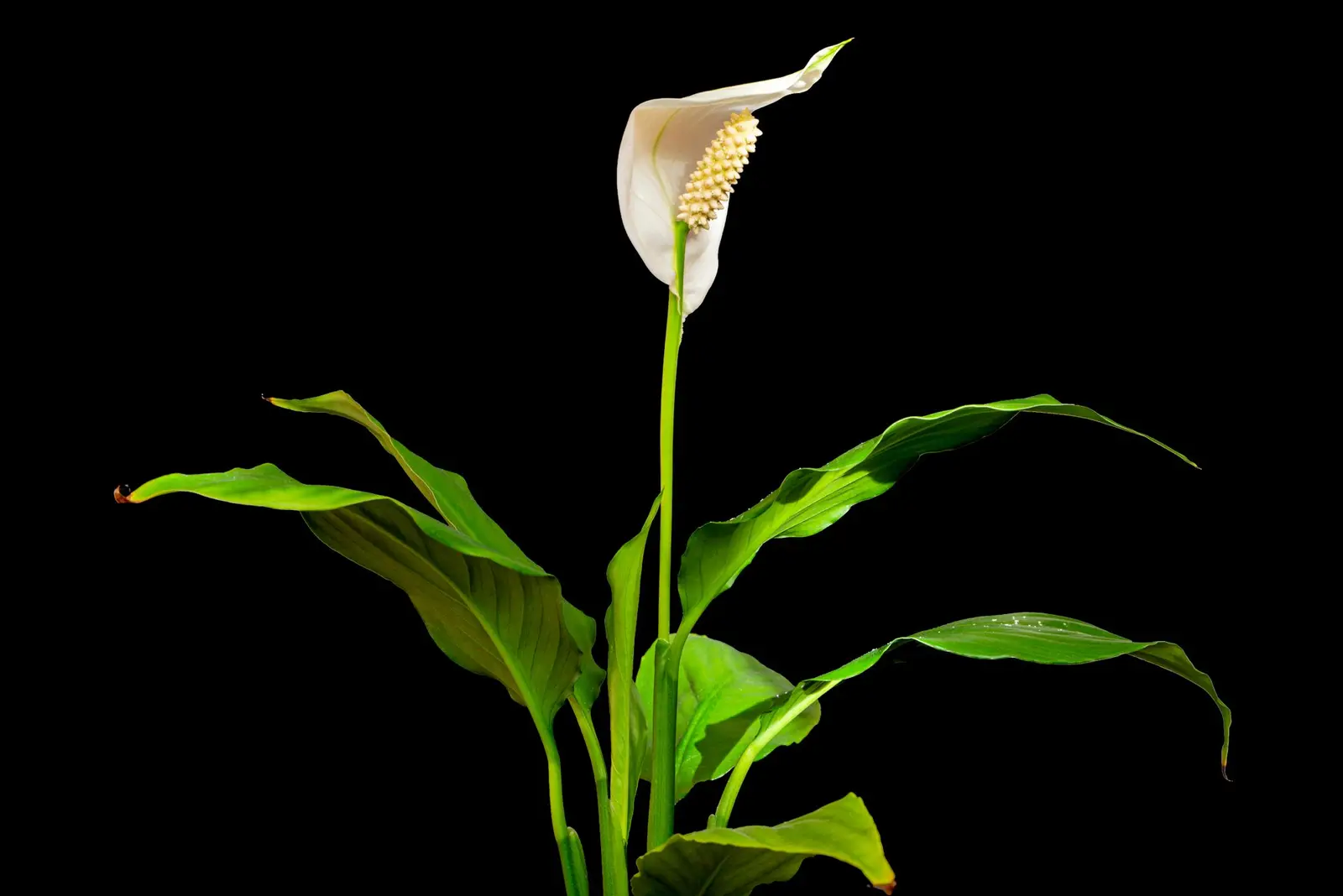
A white bloom above dark green foliage.
Feeding, temperature and humidity
Clemson recommends a balanced liquid houseplant fertilizer such as 20-20-20 every six to eight weeks in spring and summer, mixed at one quarter of the recommended strength. That is far less than the label says, and it is why feeding sits in the brown-tip table.
Keep the room warm: Clemson gives 68 to 85°F by day, about 10°F cooler at night, and says to avoid temperatures below 60°F. It also says not to put the plant where heat or air-conditioning vents blow directly on it.
Humidity is where this guide declines to give a number. None of the extension pages checked for this guide set a humidity figure for peace lilies, and several popular care pages do, without a source. Sort watering, feeding and water quality before buying a humidifier. If tips only brown in winter near a radiator, that is the case for moving the pot, not misting it.
Repotting
Repot when roots grow through the drainage holes or circle on top of the soil. Clemson says to pick a pot just one to two inches larger, notes peace lilies like to be slightly pot-bound, and says repotting can happen any time but recovery is faster in the growing season. Use a pot with holes and mix that drains.
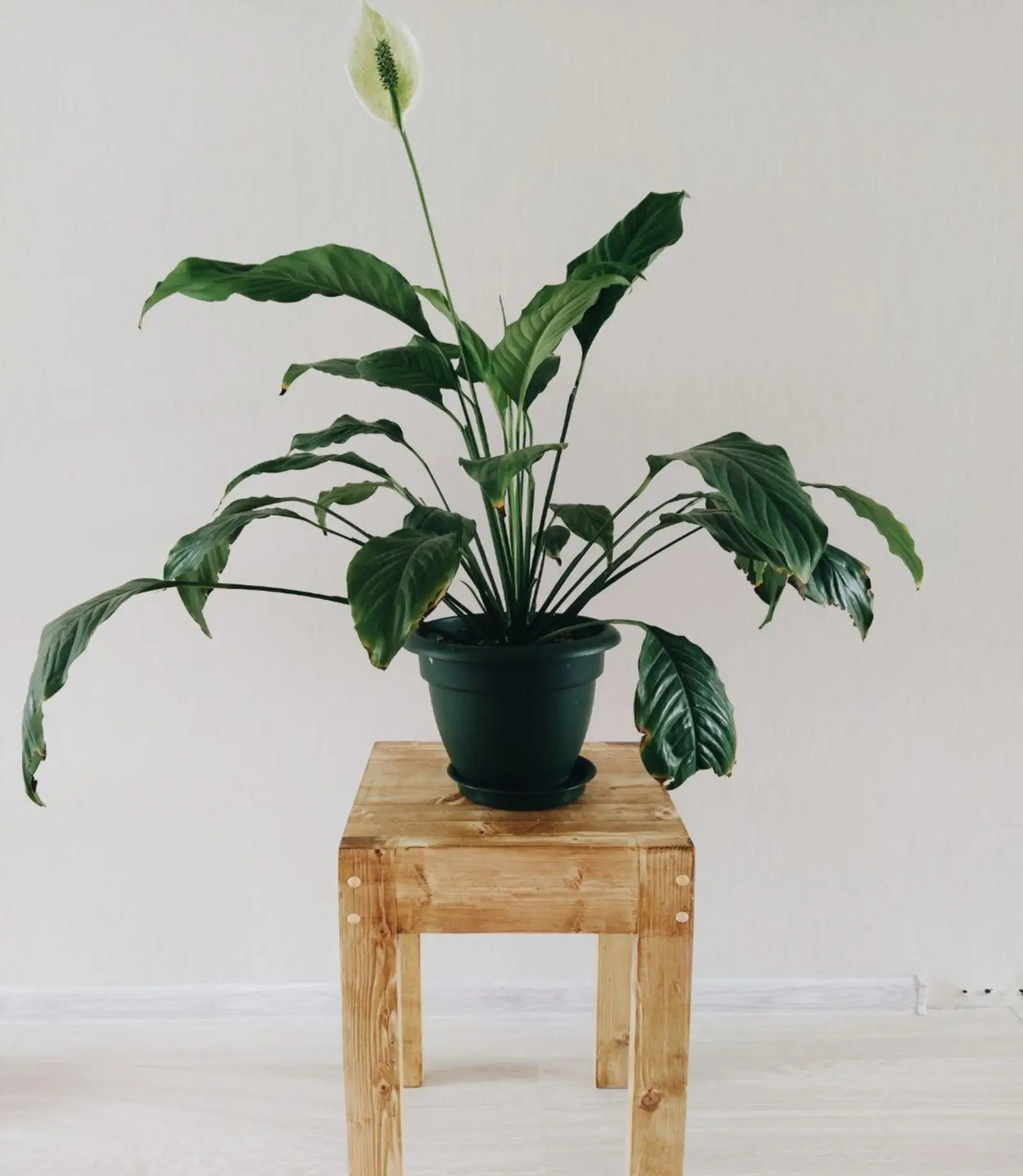
A peace lily in a green pot on a wooden stool.
UF/IFAS says to propagate by division in spring, which is also a good moment to split a plant that has outgrown its pot. Clemson and UF/IFAS put most plants at one to four feet tall. Style it on a shelf with the shelf styling guide, keeping its light needs ahead of looks.
Peace lilies and pets
The ASPCA lists the peace lily (Spathiphyllum) as toxic to dogs and cats. The ASPCA entry names insoluble calcium oxalates as the toxic principle and lists oral irritation, intense burning of the mouth, tongue and lips, excessive drooling, vomiting and difficulty swallowing. If your pet chews a leaf, call your veterinarian or the ASPCA Animal Poison Control Center.
If you cannot keep it out of reach, the pet-safe houseplants list offers alternatives, each checked against ASPCA entries.
If you are still choosing a plant
A peace lily wants steadier watering than the forgiving beginners. If you tend to forget plants for weeks, the easy indoor plants guide has options, and the pothos care guide and snake plant care guide cover two plants that cope with drier spells. Peace lilies repay a weekly look: the finger test, a lift of the pot and a glance at the new leaves.
Care sources checked October 31, 2026. Finger-test depth is a rule of thumb, not an extension figure.
Frequently asked questions
How often should I water a peace lily indoors?
There is no reliable number of days. Clemson's factsheet says to keep the soil moist but not soggy and let it dry out slightly between waterings. Push a finger about 2.5 cm (1 inch) into the mix: if it feels dry, water until it runs out of the drainage holes; if it is still damp, wait. In winter and in dim rooms the mix takes longer to dry, so the gaps grow.
Why is my peace lily drooping right after I watered it?
Damp soil with a drooping plant points at the roots. Maryland's extension service describes checking for black, mushy roots and repotting into a container with drainage holes. If the roots are white or tan and firm, look at light, heat and drafts instead.
Will brown tips turn green again?
No. Damaged tissue stays brown, so trim the tip along the leaf's natural shape if it bothers you, and judge the fix by the new leaves.
Why won't my peace lily flower?
Clemson says a lack of flowers usually means the plant is under a year old or is growing in insufficient light. Move it brighter, without direct sun, and give it time.
Is a peace lily safe for cats and dogs?
No. The ASPCA lists Spathiphyllum as toxic to dogs and cats. If a pet chews it, call your veterinarian or the ASPCA Animal Poison Control Center.
When should I repot a peace lily?
When roots grow through the drainage holes or circle on top of the soil. Go up only one to two inches in pot diameter; Clemson notes peace lilies like to be slightly pot-bound.
Sources
- Clemson HGIC: Peace Lily (Factsheet 1512)— hgic.clemson.edu
- Ask Extension (Maryland HGIC): Peace Lily leaf tips turning brown— ask.extension.org
- UF/IFAS Gardening Solutions: Peace Lily— gardeningsolutions.ifas.ufl.edu
- ASPCA: Peace Lily (Spathiphyllum)— aspca.org
- University of Minnesota Extension: Lighting for indoor plants and starting seeds— extension.umn.edu
Photo credits
Thank you to Elena Golovchenko, Sergei Fomichev, Christina & Peter and Daria Ivanenko for sharing these photographs.