Mastering the Slip Stitch Crochet: Three Essential Techniques
Learn how to use the slip stitch crochet technique to join rounds, move yarn, and create dense fabric with a step-by-step guide and troubleshooting.
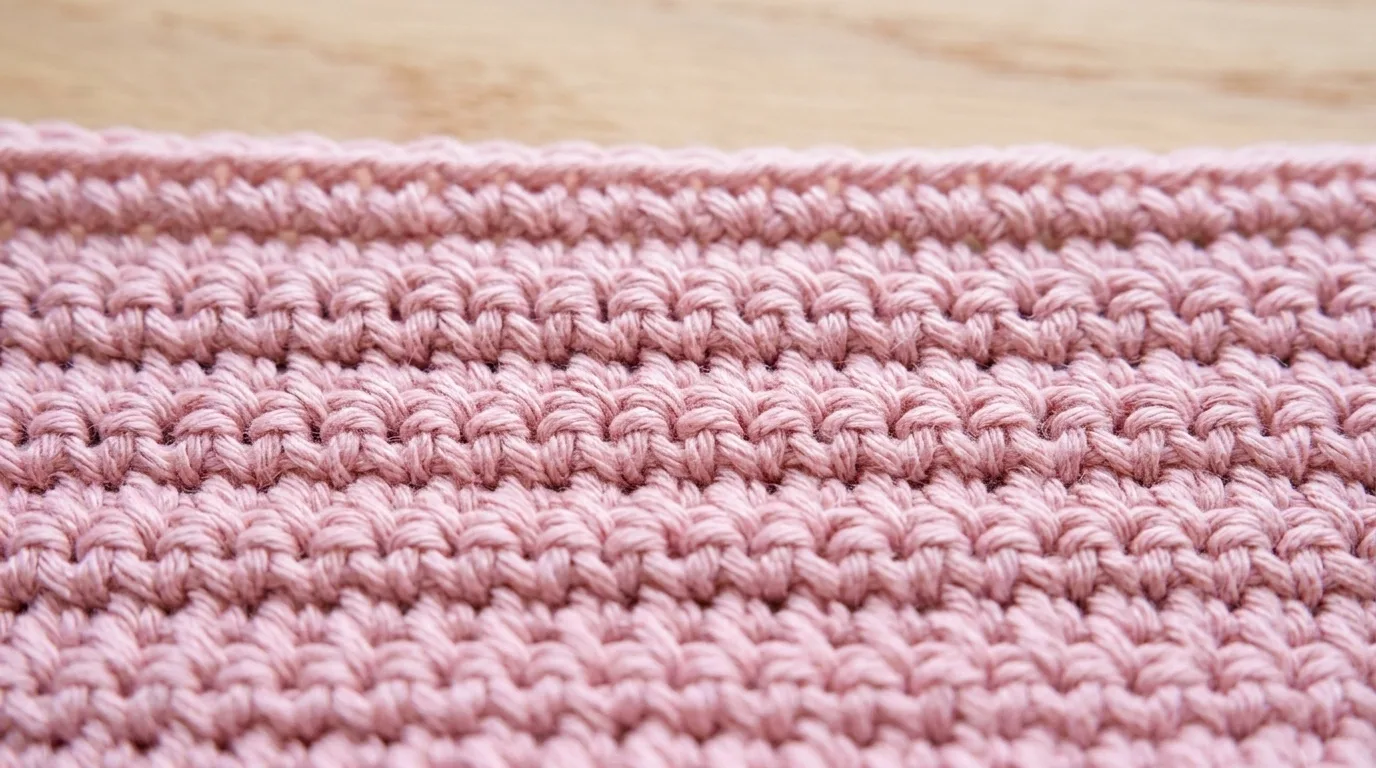

A clear, step-by-step tutorial demonstrating how to create a basic slip stitch in crochet.
A slip stitch crochet (abbreviated sl st) is the shortest and flattest of all crochet stitches, primarily used to join rounds, move yarn across a row without adding height, or create a dense, woven-like fabric. Unlike taller stitches such as the single crochet (UK double crochet) or double crochet (UK treble crochet), the slip stitch does not have a vertical post. It is an essential utility stitch that every beginner must master to finish projects neatly and transition between different sections of a pattern.
While often relegated to the background, the slip stitch performs three distinct and vital jobs. Understanding these roles, joining pieces, moving yarn discreetly, and forming its own characteristic fabric, will elevate your crochet skills and unlock new design possibilities. This guide covers US terminology, with UK equivalents noted where applicable. For foundational practice, review how to crochet for beginners. To explore broader styling choices after mastering basic utility loops, take a look at crochet hook sizes and yarn weights.
What is a Slip Stitch in Crochet?
The slip stitch is unique because it is the only stitch that does not involve a yarn over before inserting the hook into the fabric. It essentially pulls a loop of yarn through the stitch and directly through the loop already on your hook. This lack of height makes it nearly invisible when used for joining, which is why it is the standard method for closing a foundation ring or finishing a round in granny squares.
According to industry standards published by the Craft Yarn Council, hook sizes are rigorously standardized to ensure consistent gauge across projects, which is particularly important when working slip stitches that tend to be tighter than other stitches Craft Yarn Council Hook Standards. To explore how hook dimensions match up with yarn selections, check out our guide on crochet hook sizes and yarn weights.
Function 1: Joining Rounds and Seams
The most common application for the slip stitch is joining. Whether you are working in the round or connecting two flat panels, the slip stitch creates a minimal, flat seam.
To Join Rounds
When you reach the end of a round, you must connect the last stitch to the first stitch to maintain a continuous circle. To do this, insert your hook into the top of the first stitch of the round. Yarn over and draw the yarn through both the stitch and the loop on your hook in one smooth motion.
To Join Pieces
For seaming two pieces of fabric together, such as the shoulders of a sweater or the edges of a pillow, hold the two pieces with right sides facing each other. Insert the hook through the corresponding stitches of both layers, yarn over, and pull through all loops. This creates a sturdy, low-profile seam.
Function 2: Moving Yarn Without Adding Height
Sometimes a pattern requires you to start a new section of stitches several spaces away from where your current row ended. Instead of cutting the yarn and reattaching it, you can use slip stitches to travel across the top of the previous row.
Since the slip stitch adds almost no height, you can work across several stitches until you reach the desired starting point. This technique is frequently used in shaping armholes, necklines, or when moving to the center of a chain space in complex lace patterns.
Function 3: Creating Fabric and Bosnian Crochet
While usually a utility stitch, the slip stitch can be used as the primary stitch for an entire project. This technique is often referred to as Bosnian Crochet or “Pjoning.” The resulting fabric is exceptionally dense, warm, and has very little stretch, making it ideal for items that need to hold their shape.
Standard yarn weights range from lace to jumbo, and according to the Craft Yarn Council’s standardized classification system, choosing the right category is vital for the drape of your slip stitch fabric Craft Yarn Council Yarn Weight System. For a standard slip stitch fabric, a medium weight (Category 4) yarn is often recommended for beginners to see the stitch definition clearly.
Slip Stitch Ribbing
By working slip stitches only into the back loops of the previous row, you can create a highly elastic ribbing that mimics the look of knitting. This is a popular choice for hat brims and sweater cuffs. Because slip stitches are naturally tight, it is often necessary to use a hook one or two sizes larger than what the yarn label recommends to maintain a soft drape.
Decorative Surface Slip Stitching
Beyond structural uses, the slip stitch can be used decoratively. Surface slip stitching involves holding the yarn behind the finished fabric and pulling loops through to the front. This allows you to draw on your crochet work, adding outlines, stripes, or even lettering. It creates a chain-stitch appearance on the surface of the work, adding texture and color without the bulk of embroidery.
Slip Stitch Crochet Swatch Pattern
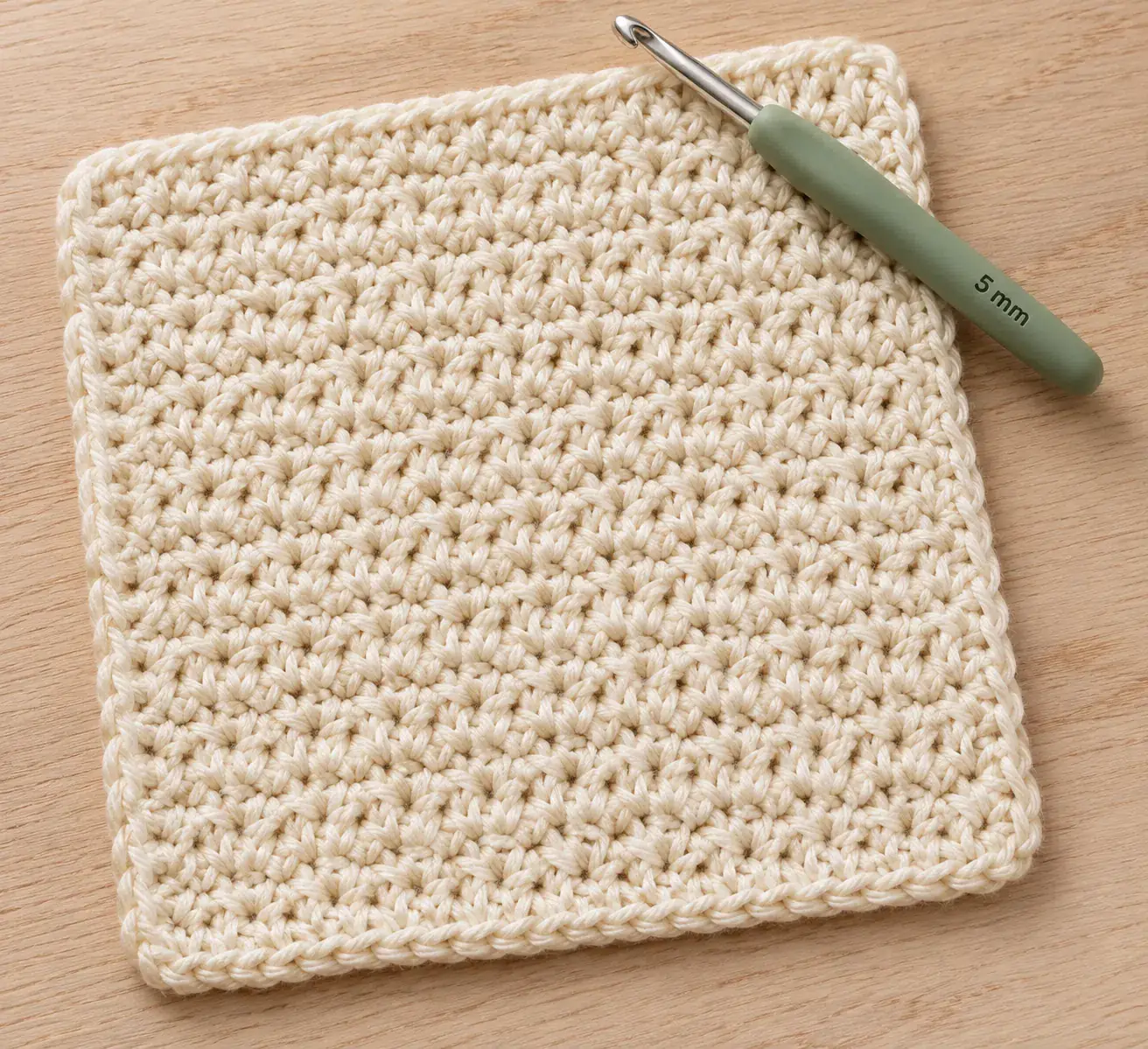
To practice the feel of the stitch and master your tension, follow this simple swatch pattern. For more inspiration on what to create once you master this technique, look at our easy crochet projects for beginners.
- Skill Level: Beginner
- Yarn Weight: 4 / worsted (e.g., 100% cotton)
- Hook Size: 5.5 mm (US I/9) - Note: Using a slightly larger hook helps prevent the fabric from becoming too stiff.
Swatch Instructions
- Foundation Chain: Ch 15.
- Row 1: Sl st in the 2nd ch from hook and in each ch across. (14 sl st)
- Row 2: Ch 1 (does not count as a stitch), turn. Sl st in the first st and in each st across. (14 sl st)
- Rows 3-14: Repeat Row 2. (14 sl st)
After finishing your swatch, remember to weave in your ends using a yarn needle. For long-term care of your finished projects, always refer to the standardized care symbols provided by the manufacturer Craft Yarn Council Care Symbols.
Troubleshooting and Tension Control
The most frequent struggle with slip stitch crochet is tension. Because there is no extra yarn in the stitch to provide give, it is very easy to work them too tightly. If you find it difficult to insert your hook into the stitches of the previous row, your tension is too high.
Fixes for Tight Tension:
- Relax Your Grip: Focus on keeping the loop on your hook loose.
- Up-Size Your Hook: Use a hook that is 0.5 mm or 1.0 mm larger than the one used for the rest of the project.
- The Lift Technique: After drawing the loop through the stitch, lift the hook slightly to elongate the loop before pulling it through the loop already on your hook.
By mastering these three jobs, the slip stitch transforms from a simple finishing move into a versatile tool in your crochet repertoire. Whether you are creating a seamless join or a sturdy pair of slipper soles, the humble slip stitch is a technique you will return to in almost every project.
Frequently asked questions
Why is my slip stitch fabric so stiff?
This is usually due to tension being too tight. Try to relax your grip on the yarn and hook. Consider using a slightly larger hook for the slip stitch rows if working them within a larger project.
How do I avoid my fabric pulling crooked when using slip stitches?
Ensure you are inserting your hook into the correct loops and maintaining consistent tension. If joining pieces, make sure you are working through corresponding stitches on both pieces. Uneven tension is the most common cause of distortion.
Can I substitute yarn weight when using slip stitches?
Yes, but yarn weight will affect the fabric's drape and density. A heavier yarn will create a thicker, stiffer fabric, while a lighter yarn will be more flexible. Always check gauge if the project's size is critical.
What's the difference between a slip stitch and a single crochet?
A slip stitch (sl st) is the shortest crochet stitch, primarily used for joining or moving yarn without adding height. A single crochet (sc) is taller and creates a denser fabric, adding height and structure to a project.
When should I use UK terms for slip stitch?
In UK terminology, the slip stitch is called a 'slip stitch' (sl st) and does not have a different name. The confusion often arises with other stitches like single crochet (UK double crochet) and double crochet (UK treble crochet).
Photo credits
Thank you to AI illustration for sharing this photograph.