How to Propagate Snake Plant: Pick the Right Method
How to propagate snake plant by division, pups or leaf cuttings: which methods keep variegation, which way up to plant, and what to do when cuttings rot.
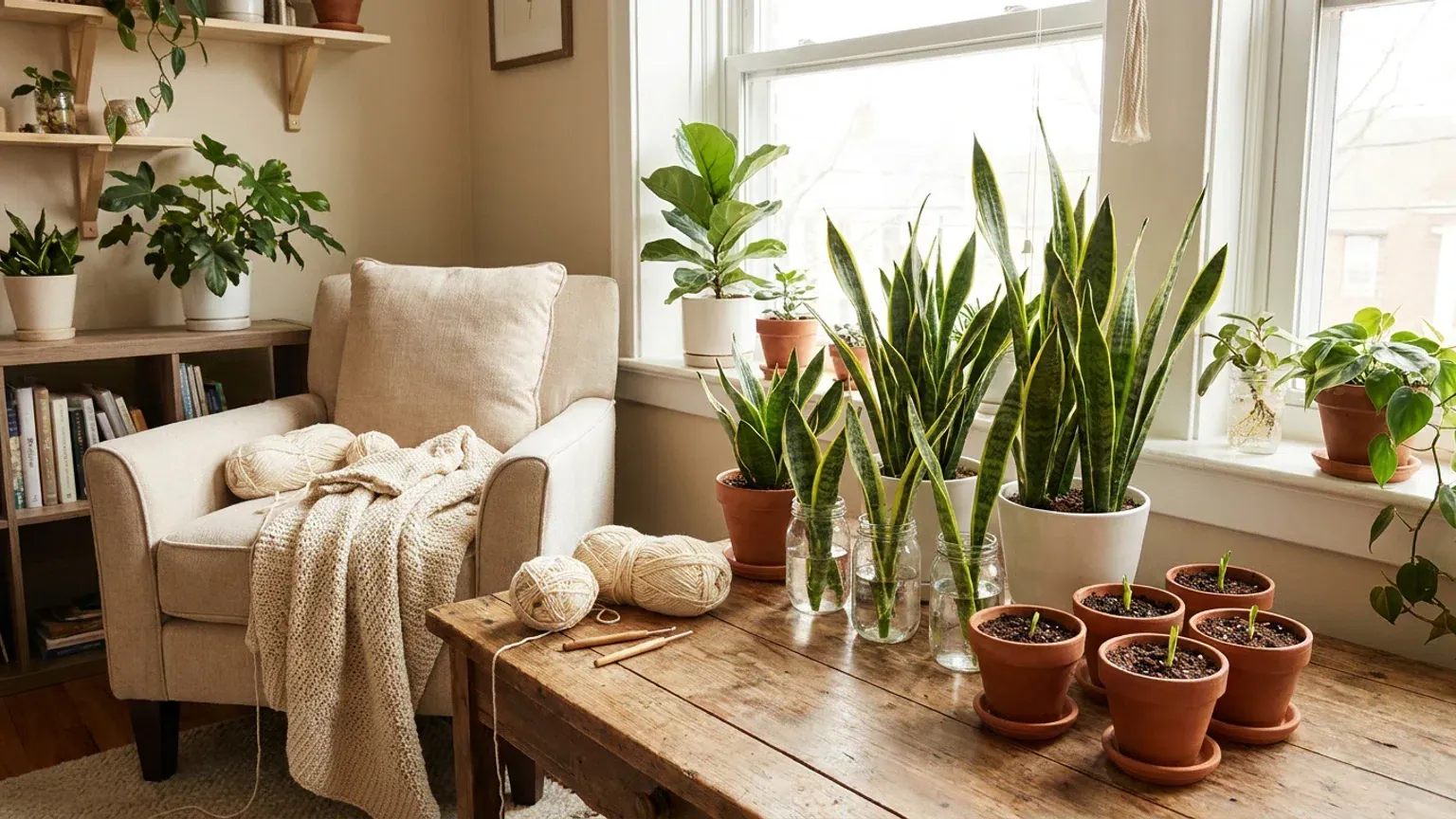
Use division for a crowded pot or a variegated plant, pot up pups when a rooted one sits beside the parent, and take leaf cuttings only from plain green plants, because variegated leaf cuttings usually grow back plain green.
Division is the method of splitting a crowded clump into separate pieces, each of which needs its own roots and at least one growing point. Pups (also called offsets) are young shoots that grow from the parent’s rhizome and can be pulled away once they have developed roots of their own. Leaf cuttings are sections of a mature leaf that are rooted in damp, free-draining mix until small plantlets form at the base.
This guide compares RHS and extension advice, points out where the sources disagree, and includes a repair table for cuttings that go wrong. Everyday watering and light are covered in the snake plant care guide, and if you are still choosing which plants to grow, the easy indoor plants for beginners list is a good place to compare options.
Which method should you use?
| Your plant | Best method | Why |
|---|---|---|
| Variegated (for example ‘Laurentii’ with yellow edges) | Division or pups | Iowa State says to divide to preserve the pattern |
| Plain green, crowded pot | Division | Gives a full-sized plant straight away |
| Plain green, one or two spare leaves | Leaf cuttings | Many plants from one leaf, but slow |
| Healthy pup beside the parent | Pot up the pup | Quickest way to a new plant |
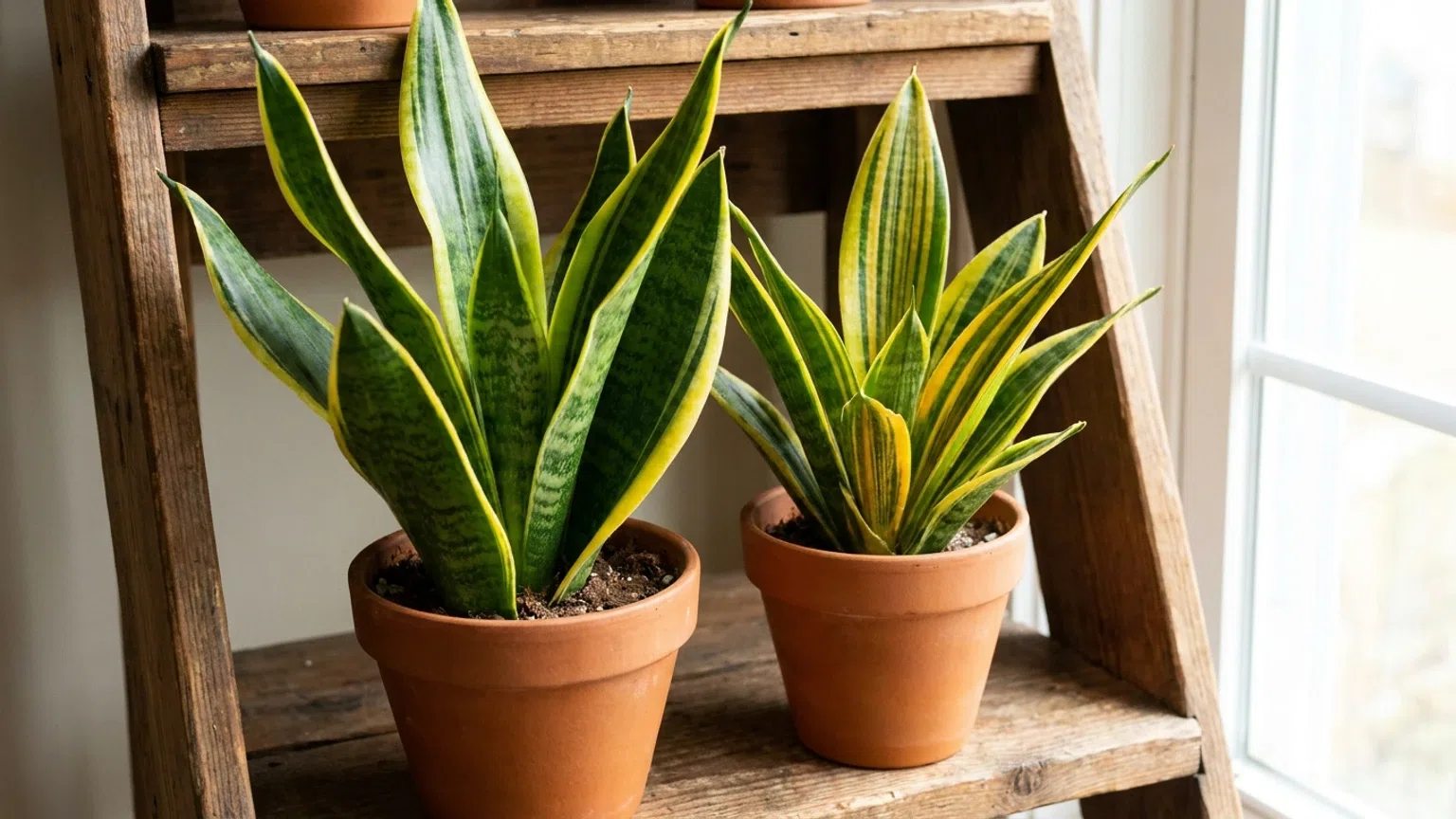
NC State Extension lists cultivars with varied stripes and edges, including ‘Laurentii’ and ‘Golden Flame’. If your plant is one of them, assume leaf cuttings will not copy it.
Why leaf cuttings lose variegation
Melinda Myers explains that the gene for variegation is in the rhizome, not the leaves. A leaf section grows a new plant from its base, so the offspring comes out plain green. The RHS agrees that leaf cuttings suit non-variegated plants and that variegated cuttings tend to revert to green.
Division keeps the whole rhizome, so it keeps the traits. Pups grow from the same rhizome, so they should also match the parent. That last point is my inference, not a line from a source.
Method 1: Division
Best for a crowded plant. The RHS recommends spring.
- Slide the plant out of its pot.
- Split the clump so each piece has at least one growing point and some roots. Pull sections apart by hand, and cut tough rhizome with a sharp knife. Myers says to leave at least one growing point per section.
- Discard damaged or dead sections.
- Pot each piece in its own container with drainage holes and free-draining mix. Tall pieces may need a cane and string until they can stand alone (RHS).
Wear gloves. The RHS notes the sap can irritate skin.
Method 2: Pups (offsets)
The RHS says to use established plants that have been in place for two or three years. Pull well-rooted offsets away from the rootball, then pot them singly or several to a pot. Refill the parent’s pot with compost to close the gaps. Pups without roots are riskier. Cut them off only if you are willing to treat them like a leaf cutting and wait.
Method 3: Leaf cuttings in mix
- Hydrate the parent. Iowa State advises watering the plant the day before so the leaf is full.
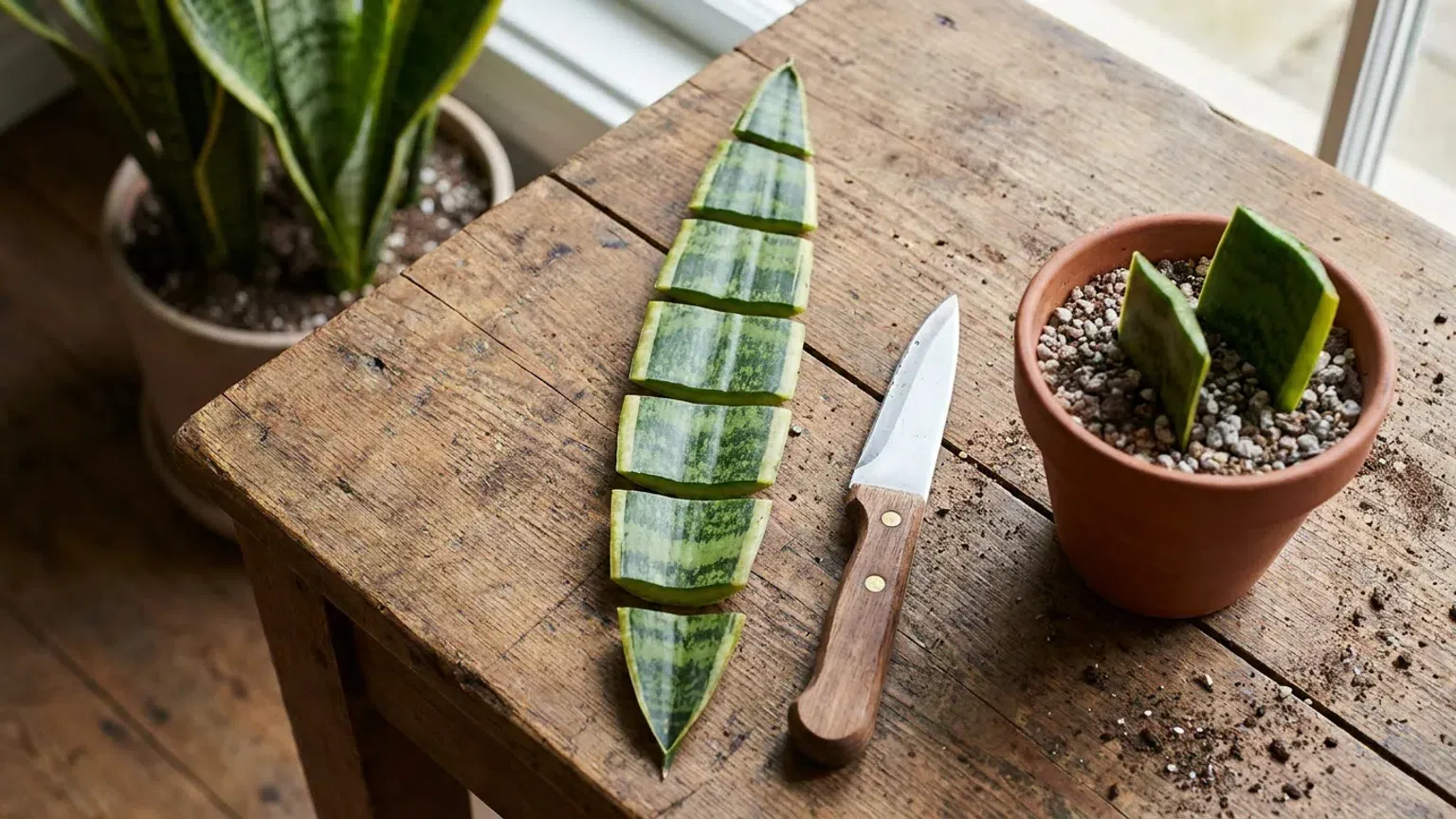
- Cut a mature leaf at the base and slice it across into sections about 3 to 4 inches tall (Iowa State). The RHS suggests 2 inches (5 cm). Either is workable, so pick one size and keep the sections equal.
- Keep track of the top. The RHS says to keep each piece oriented as it grew. Cut the top of each piece at a slant, or lay the pieces in order on a tray so you always know which end is the bottom.
- Let the cuts dry. The RHS suggests a day or two to callus.
- Plant bottom end down, 1 to 2 inches deep (Iowa State), or about half the section (Myers). Use a damp, well-draining mix. Iowa State names perlite, sand or a perlite-peat blend. The RHS suggests a 50:50 mix of peat-free loam-based compost and horticultural grit.
- Keep it warm and lightly moist. The RHS suggests bottom heat of 18°C (65°F), or a clear bag in a warm room.
- Wait. Expect plantlets at the base in one to two months (Myers) or about two months (Iowa State). Do not tug the cutting to test for roots.
What about water propagation?
None of the extension or RHS pages I read give a water method for snake plant. A hobby guide, The Garden Style, describes standing a cutting’s base in water and says rooting typically takes 4 to 8 weeks and sometimes up to 12, but it gives no depth. Water also raises the risk of rot at the base. For a more reliable result, use the mix method above (Method 3), and keep the cutting bottom end down either way.
When cuttings deteriorate
| What you see | Likely cause | Fix |
|---|---|---|
| Soft, mushy base | Rot from too much moisture or a dirty container | Throw it out. Redo with a fresh piece, a clean pot and a barely damp mix (Iowa State recommends sterile containers and good drainage) |
| Cutting shrivels, mix bone dry | Mix dried out | Check often and re-moisten (Iowa State) |
| Cutting yellows or collapses in a dim spot | Light too low | Iowa State links rot to low light. Move to brighter light |
| Nothing after two months, base still firm | Slow rooting | Do not lift it. Wait up to about three months, looking for small plantlets at the base. Iowa State gives about two months and Myers one to two, so a longer wait is reasonable only while the base stays firm |
| Nothing after two months, piece was planted upside down | Wrong orientation | No roots will form. Take a new section and plant it bottom end down |
To prevent rot when using rooting powder, pour a little out for each use and never dip a cutting into the main pot, so disease is not spread between cuttings (Iowa State).
If a cutting is soft only at the cut end, trim back to firm tissue, let it dry again and replant. That is a general-practice suggestion rather than a sourced step, so keep a spare.
After you pot up
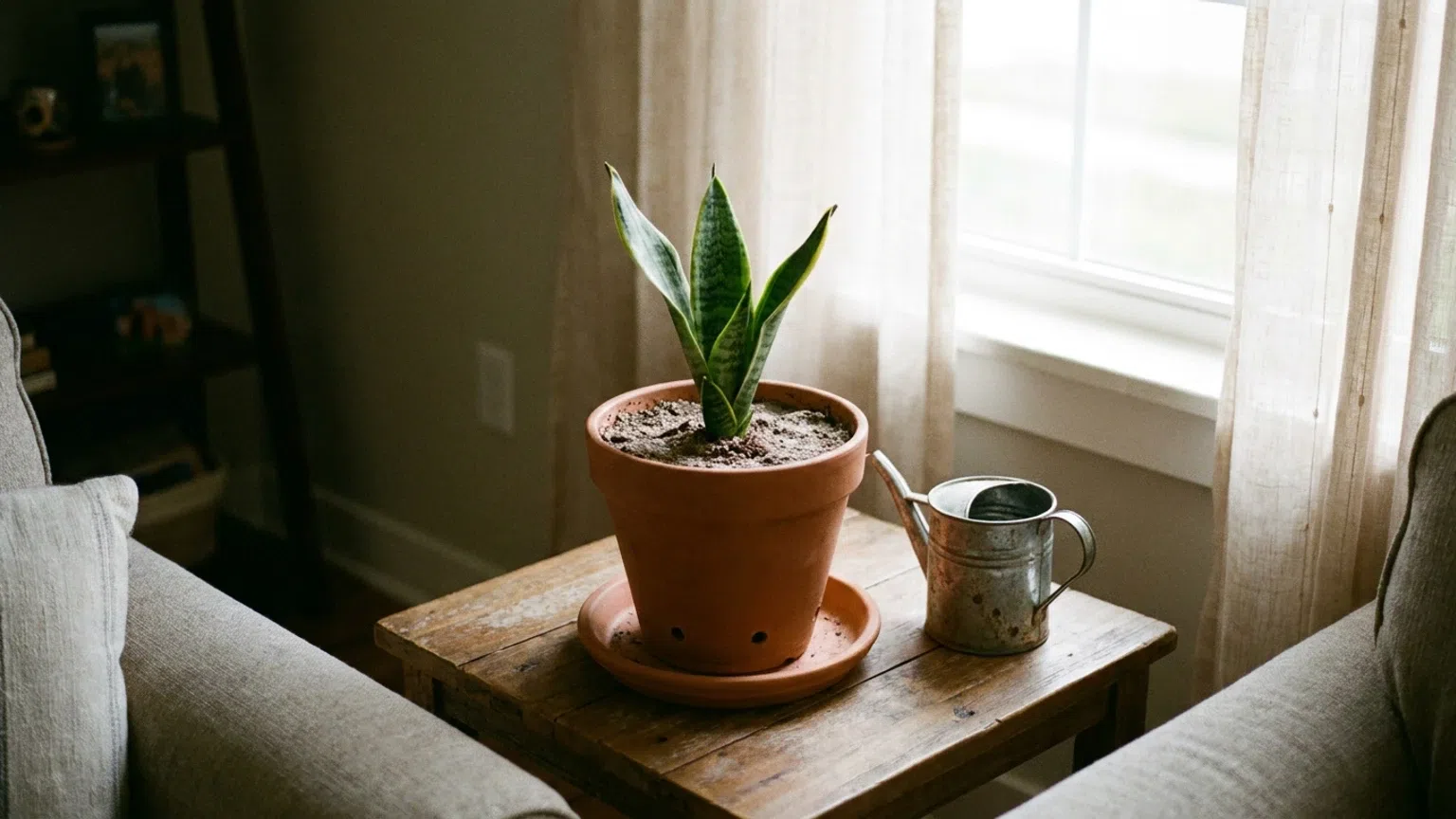
Once the new plant is established, follow routine care: water only when the mix has dried, use a pot with drainage, and keep it warm. Snake plants tolerate dimmer rooms better than many houseplants, and our list of low light indoor plants shows where they sit among other tolerant choices, while the snake plant care guide covers light and watering in more detail.
Snake plants are listed as toxic to cats and dogs by the ASPCA, so keep both the parent and the new plants out of reach of animals in your home. If you share your space with pets and want alternatives, see our guide to pet safe houseplants.
Frequently asked questions
Which snake plant propagation method keeps variegation?
Division. Melinda Myers says the variegation gene sits in the rhizome, not the leaf, so leaf cuttings of variegated plants give plain green offspring. Iowa State Extension and the RHS give the same warning and name division as the way to keep the pattern.
Which end of a snake plant leaf cutting goes in the soil?
The end that was closest to the roots. The RHS says to keep each piece oriented as it grew. Iowa State advises pushing the section 1 to 2 inches deep, bottom end down.
How long do snake plant leaf cuttings take to root?
Iowa State Extension expects shoots or plantlets at the base in about two months. Melinda Myers gives one to two months. Treat those as ranges, because warmth and light change the pace.
Why is my snake plant cutting turning soft and mushy?
Soft tissue usually means rot from too much moisture or an unclean container. Discard the soft piece. Retry with a fresh section, a clean pot and a barely damp, free-draining medium. Iowa State also links rot to light that is too low.
Can I propagate a snake plant in water?
Hobby guides do it, but none of the extension or RHS pages I read use water. They root cuttings in damp, free-draining mix. If you try water, treat it as an experiment and keep a spare cutting in mix.
When is the best time to propagate a snake plant?
Spring. The RHS recommends March to May as plants come out of their winter rest. Iowa State calls early spring ideal for leaf sections but says other seasons can work.
Sources
- RHS: How to grow sansevierias— rhs.org.uk
- Iowa State Extension: How to Propagate Houseplants by Leaf Section Cuttings— yardandgarden.extension.iastate.edu
- Melinda Myers: Propagating Snake Plants, Starting New Plants from Old— melindamyers.com
- NC State Extension: Dracaena trifasciata— plants.ces.ncsu.edu
Photo credits
Thank you to AI illustration for sharing this photograph.